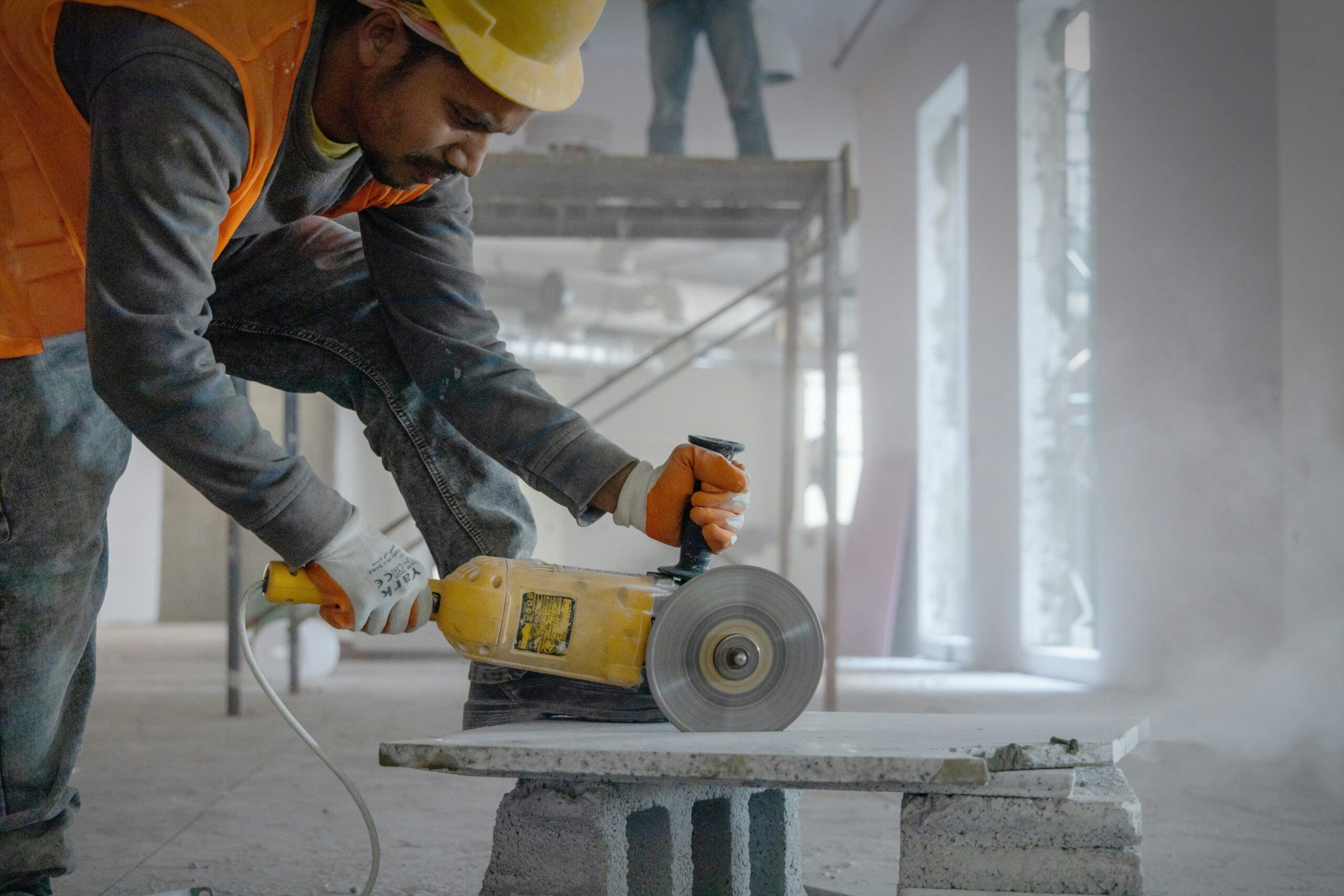
Concrete may seem immoveable until a particular job necessitates cutting cleanly through it. Only then does it become clear the inherent obstacle at hand, it’s dense and hard to get through, and commonly laced with rebar. Something powerful enough to get through it also needs the restraint necessary to cut it smoothly.
The purpose of an electric concrete saw is precisely for this.
Its type and configuration varies, but with its use you can tackle anything made of concrete, blocks, masonry, asphalt pavers, and other types of natural mineral materials. Hand held machines can be found as well as larger, stationary and walk behind models. When you invest in a powerful machine, be sure that your job is set up so that success is assured – what’s most effective for a finished job will be dependent on a few factors.
The blade you are using to do the sawing, what you will be cutting the concrete with, the depth and how well it is plugged in and a system for managing dust (even while cutting the toughest materials) — concrete dust can be an even biggest hazard than the powerful saw itself.
The federal regulations that define workplace safety, enforced by OSHA, clearly say that the easiest and best way to protect yourself and coworkers on concrete cutting projects is with a consistent flow of water, particularly when using wet cutting methods for concrete to control silica dust.
What Is an Electric Concrete Saw?
This powered sawing device cuts tough construction material using abrasive or increasingly diamond teeth. A real concrete saw is built specifically to handle the far higher friction and resistance that comes with cutting stonemasonry. It has a motor turning the blade and then the teeth on that blade slowly shave off tiny slices.
When we’re talking about them there are several distinct kinds that come with their respective applications.
The small handy one which may suit the smaller jobs and patching tasks is one option. Then there are those that allow to saw through pavement, road and slabs etc with deeper wider cuts that come with more stability. Accordingly you shouldn’t worry too much about the general label for this machine and rather consider the nature of your specific undertaking.
That said, some factors such as your specific task (cutting concrete, other solid matter) require attention to the material in use, need for maximum depth of cut, your local power source (in most cases with these types of tools this will be electric, unless specified otherwise you can count on electric operation in most cases!), should water be available, environment in which you’re cutting, how much accuracy etc.are necessary.
Why the Diamond Blade Matters So Much
The power source is the motor, however it’s really the diamond blade that does the cutting. Since the diamond cutting segments offer advantages when dealing with some kinds of abrasive-nature mineral materials it’s easier for the saw to approach material this means cutting slowly by grinding through such material. Similar as the previous instance as any tool it will have to correlate with the product that would be sliced, the situation and circumstances whereby there may be a cut or cuts.
A concrete cutting blade will not fit well to each and every cement chopping conditions or situation that needs an approach on this particular type of product.
There is various ways how the building might come in to view: it is comprised of particularly corrosive substances of gravels; it consists of steels bars which significantly impact efficiency of the blade. Such as anything Else, size of the blade impacts intensity from the cutting into this. Size of cutting device will likely cut far, but it demands machine will probably support this measure. Fitting a blade simply due to the fact they match physically is never a great strategy.
For such, one ought to observe the recommended standards from producers for its allowed sizes, speed along with cutting way.
Some up-to-date designs are equipped with: depth controls for precision; indicators for marking; guide-wheel system and water, as well as vacuum interface devices designed for better-quality. Such elements can play a critical function when dust regulation, and additionally precision are highly demanded.
Electric Concrete Saw vs. Other Types of Concrete Saws
Electric models are just one classification of concrete saws. Gas power concrete saws are practical as a tool for rough outdoor jobsite sawing, when there’s need to be MOBILE. Electric tools definitely have the upside as soon as exhaust fume are unsuitable or electrical power supply are simply plain and accessible.
Batteries are another method to power concrete saw cutters allowing a cord’s-free work yet they’ll vary widely by manufacturer as far as lifespan.
A walk-behind machine enables it to be utilized far, straight through pavement and structures with less pressure on the operator. A little project to patch the street or reduce a little pathway hole will likely just need a portable device. However, if dealing with pavement removal of several lengths to lay wire as an example, then use specific walk-behind and also other large pavement tools. Why most mistakes were made as in choosing an appliance using power output, not task.
When an Electric Concrete Saw Makes Sense
An electric concrete saw can be useful for jobs such as cutting:
- Concrete slabs and floors
- Concrete blocks
- Masonry
- Pavers
- Small sections of asphalt
- Expansion or control joints
- Openings for repairs
- Channels or trenches
- Sections of damaged concrete
The required depth is often the deciding factor, especially when choosing equipment for concrete cutting projects involving different materials and cutting requirements.
A shallow decorative or control joint is a very different job from cutting completely through a thick reinforced slab. Attempting to make a deep cut with equipment designed for shallow work can lead to slow progress, excessive blade wear, overheating, or loss of control.
For particularly deep or heavily reinforced concrete, specialized professional equipment may be more appropriate.
Wet Cutting and Dry Cutting Are Not Simply Two Equal Choices
One of the most important decisions is whether to cut wet or dry.
Wet cutting involves directing a stream of water directly onto the cutting edge of the blade to cool it and control airborne dust. ” OSHA reports that applying water to a saw blade while cutting materials such as crystalline-silica-bearing concrete ‘greatly decreases dust’ generated,” according to the agency. Wet cutting can also combat heat buildup by keeping the blade’s temperature low, thus lowering the chances of the blade breaking under the combined stress of high heat and exertion, OSHA says.
Dry cutting, omitting the use of water, can be beneficial when surrounding environments cannot handle the presence of water.
Yet,”just because cutting is done dry doesn’t mean you can safely tolerate being in the path of the released dust. Concrete, for instance, emits respirable crystalline silica, which must be addressed with engineering controls,’ explains OSHA,”according to the agency. What controls depend on equipment and conditions but might entail an accompanying dust-collection system or shroud. Vacuum systems with suitable filtration is one of several “OSHA guidelines to use when Wet Cutting’s impossible.”
“In brief, dry cutting is never simply a matter of ‘just cut it and wear a mask.’”
The cutting operation itself requires design for dust control.
The Hidden Hazard: Concrete Dust
The visible cloud produced while cutting concrete is more than a nuisance.
Crystalline silica can be found in concrete, as well as various other masonry products, making respirable crystalline silica exposure an important safety consideration during cutting operations.
Any time you cut concrete or another masonry product fine particles that may include crystalline silica can be released in the air and inhaled. Prolonged or repeated inhalation of those particles can lead to life-threatening occupational diseases such as silicosis and lung cancer, which is why OSHA requires applicable employers performing construction subject to their standard to implement dust controls for these exposures.
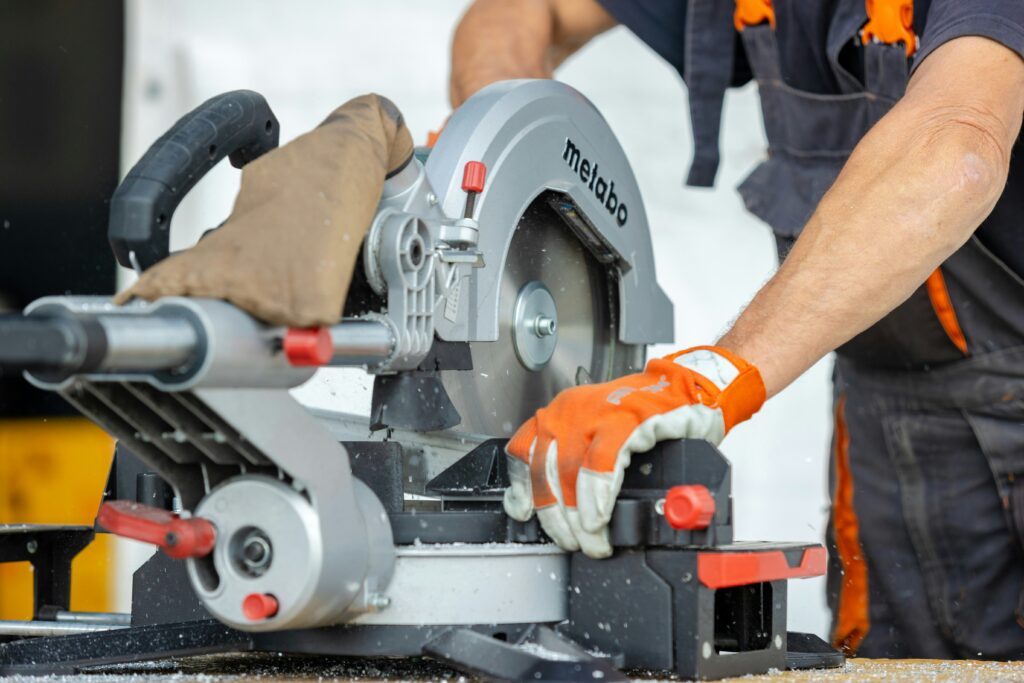
This is the reasoning behind why a proper professional cutting set up may look and act radically differently than someone taking a hand-held saw to a slab of material. Factors that will be utilized include: water fed cutting, dust extraction, ventilation, area containment, and-where necessary-appropriate respiratory protection. A second problem often overlooked is the cleanup: when you water fed cut concrete you create a slurry containing fine particles; if you allow that slurry to dry you have essentially recreated your dust problems again, so OSHA’s best practice is not to let any wet slurry dry out at your work site.
Electrical Safety Becomes More Complicated When Water Is Involved
Wet cutting presents an obvious contradiction: water helps control dust, while electricity and uncontrolled water create an electrical hazard.
This is not to say that electric wet cutting is hazardous. It does mean that the electrical hookups must be suitable for the equipment and work surroundings. OSHA suggests the use of ground-fault circuit interrupters (GFCI) along with waterproof, sealable electrical connections when water is used with power tools and equipment on the job.
The power tool’s cord should be protected from the blade and from standing water, sharp objects or heat as well as other hazards; OSHA suggests that workers do not carry power tools by the power cord and unplug tools when servicing them or working on their attachments.
This makes the job of wet cutting requiring two forms of control at the same time: dust control as well as electrical control.
How to Make a Cleaner, More Accurate Cut
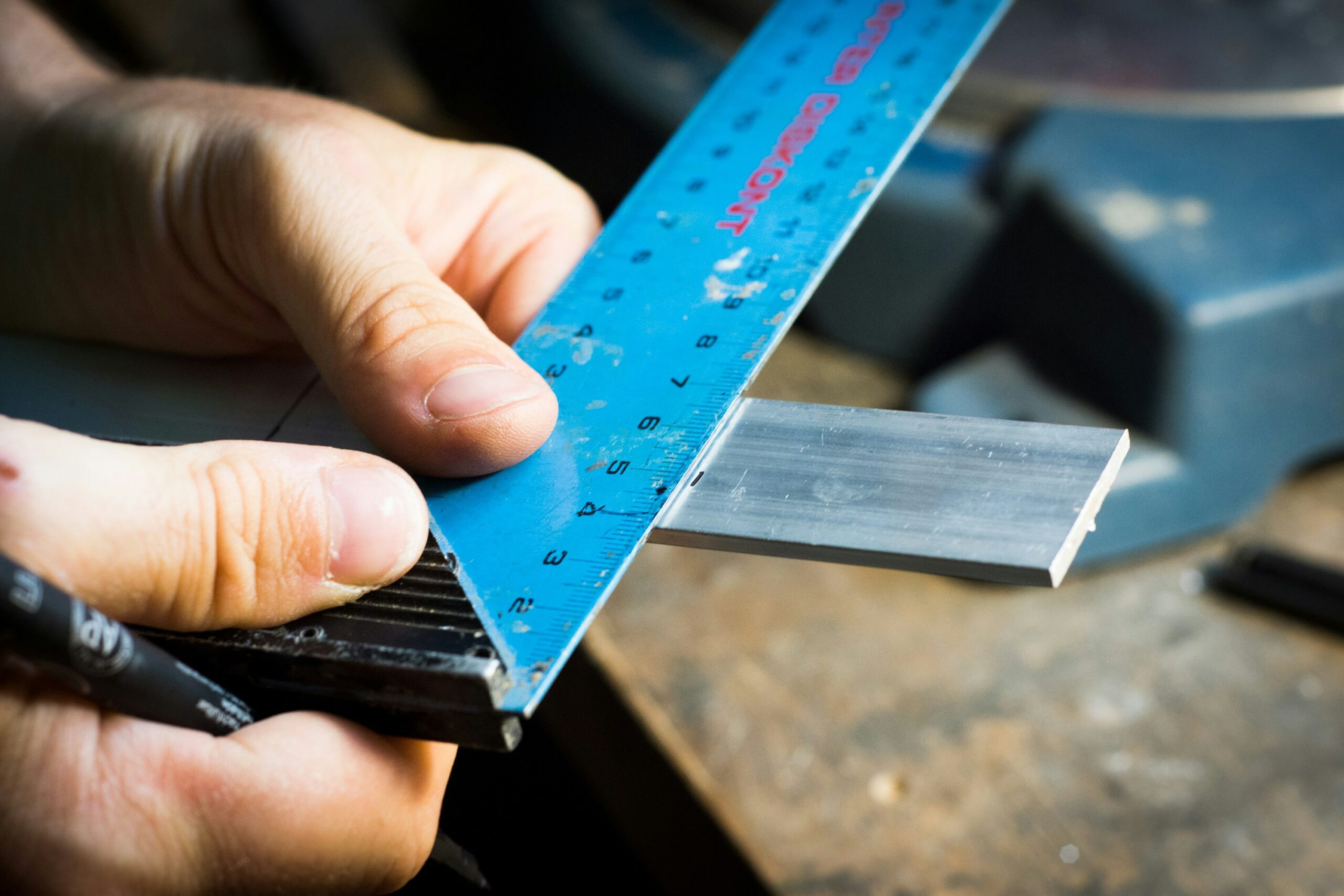
Most successful concrete cuts can begin before the saw even touches the material. Prepare the space prior to the cut You don’t want an operator trying to go back and correct a bad cut once the blade is running, so start by having a clearly marked cutting line. A surface should also be examined to make sure there are no unexpected reinforcement bars, electrical conduits or other obstructions just below the surface; just because concrete appears empty doesn’t mean that it is.
Appropriate cutting depth Ensure the cutting depth is set to what the cut requires using appropriate equipment.
Avoid feeding too hard Forcing the saw through the material “as fast as possible” is another pitfall common to concrete saw operators. Brute strength generally doesn’t work well with concrete saws; it actually hinders the blades’ performance. Don’t rush through. A smoother, controlled cut will generally go as smoothly overall.
Using wheels or guides Many electric cut-off saws include wheels to make long, straight cuts much more manageable and a helpful guide will aid with accuracy.
What Happens When the Saw Starts Struggling?
Concrete Saw Slowdown. A concrete saw that is slowing, shaking violently, getting hot and making a weird cut pattern should be investigated. Whether the material being cut, material reinforcement, the cutting depth, feed force, power supply or blade itself, a problem likely needs to be solved.
Too much force and the saw will bog down.
The wrong type of blade and you’ll run slow. The power source has its own peculiarities. Reinforcement, in particular, drastically affects how the blade is cutting and whether any problems arise. When things change rather than applying more force and risk the equipment itself the cause should be discovered.
If a blade chips, for instance, it needs to be taken from the job by the powers of OSHA.
Same goes for the guard and other protecting equipment: They’re not there as decoration.
Common Mistakes People Make With Electric Concrete Saws
Some common missteps to avoid: 1) Using the wrong blade: A powerful saw with an inadequate cutting accessory is a work in progress. 2) Skimping on controls for 2 minutes: “Even short tasks of just a few minutes may involve generation of regulated silica-containing dust under certain conditions, OSHA cautions,” according to an article in Safety & Health magazine. Such tasks are not exempt under the construction silica standard just due to time.
3) Believing outdoor is good enough: ‘Dust will travel in outdoor settings and disperse,’ a Wisconsin Dept.
Of Health fact sheet advises, ‘but it’s not completely removed from workers.’ 4) Neglecting electrical safety in wet cutting: ‘If a system that was not designed for equipment is used to feed water to a saw, a real risk could be posed,’ a Construction Safety & Health expert points out in regard to wet saws. Electrical wiring and protection needed for such tools must suit the setting. 5) Concentrating only on the cut line: Some operators lose track of blade, site, footing, cords and other hazards as they concentrate entirely on achieving the cut.
What good is a perfectly clean, precise cut if it didn’t have to come at too high a cost?
When Should You Use a Professional?
Concrete cutting isn’t something every DIYer should take on. Professional concrete cutters are indispensable in situations where you’re working with deep structural cuts, reinforced concrete, large slabs, difficult access, substantial dust control issues or simply have no idea what you’re working with inside a concrete structure. You may also need a professional when a cut needs to be precise to stringent tolerances, or if an error would result in costly repairs.
One other factor to consider, hazards can be encountered other than the saw itself.
Before cutting structural concrete you must know what affect the structural integrity would be from a cut. Unknown what is structural within an wall, slab, column, beam or other structure. Professional advice in these situations, makes sense.
A Practical Checklist Before Cutting
Let’s take for example the “electric concrete saw”. (The cord can cause concern). There are a number of “questions” that an operator needs answered before even pulling the trigger:
What am I cutting? What should the cut depth be? What material is specified for my saw? Can I cut “wet” and what kind of protection will there be for electricity if I cut “wet”? Will I have to dry cut and is a dust collection system readily available for it?
The saw itself needs to be inspected, along with the blade (corrosion, wear, etc.), the guard (properly positioned, etc.), the electrical cord (cuts or damage to insulation) the water/dust collection mechanism, and last but not least the surrounding work area… Don’t forget the importance of others not being subjected to the dust, noise, and flying debris. Personal protective equipment: this has come into play even for those cutting “wet” – just get comfortable that your safety (eyes, ears, feet, etc) are addressed for your specific job task and the employer workplace requirements and remember (even OSHA has brought it up) eye and face protection regardless of the cutting process!
The Bottom Line on Electric Concrete Saws
An electric concrete saw is a specialized cutting tool, not simply a more powerful version of an ordinary circular saw. How well it works relies on:-
Motor, Diamond Blade, Depth of cut, material being cut, approach of operator, method of dust control.
For many tasks an electric saw is the best way of working without engine exhaust but electrical safety should then be more of a consideration when using water. While concrete dust must be considered an occupation hazard-not dirt.
Maximum efficiency is best derived from;- PLANNING the cut prior to machine start up, using the right blade, proper dust controls, maintenance of equipment, having the skill to recognise when a job is beyond the scope of either machine or operator.
A concrete saw should make cutting more controlled, not less responsible.
FAQs About Electric Concrete Saws
1. Can an electric concrete saw cut through reinforced concrete?
Some electric concrete saws can cut reinforced concrete, but the machine and blade must be designed for that application. Reinforcement can significantly increase cutting difficulty, and deep structural cuts may require specialized professional equipment.
2. Is wet cutting better than dry cutting concrete?
Wet cutting is often advantageous because water can substantially reduce airborne dust and help cool the blade. However, wet cutting requires appropriate electrical protection and water management. Dry cutting may be appropriate in situations where water cannot be used, provided an effective dust-control strategy is available.
3. What blade should I use with an electric concrete saw?
A diamond blade designed and rated for the specific material and saw is generally used for concrete cutting. Blade diameter and maximum operating speed must match the manufacturer’s requirements.
4. Does cutting concrete create dangerous dust?
Yes. Cutting concrete can generate respirable crystalline silica when silica-containing materials are disturbed. Appropriate engineering controls, such as water application or suitable dust extraction, are important for reducing exposure.
5. Can I use an electric concrete saw indoors?
It depends on the equipment, ventilation, electrical setup, dust-control method, and specific job. Indoor cutting can require particularly careful dust and ventilation controls because contaminants cannot disperse as easily as they might outdoors.
6. Why does my concrete saw keep slowing down?
Possible causes include an unsuitable or worn blade, excessive feed pressure, cutting too deeply for the machine, difficult aggregate or reinforcement, or an equipment or power-supply problem. Stop and identify the cause rather than simply forcing the saw harder.
7. Do I need a GFCI when using an electric saw with water?
OSHA guideline on electrical work concerning in part to work with electrically powered tools on sites involving water use says: “Make sure proper water –tight … sealed electrical connections are used with electrically powered hand tools and equipment. … Comply with all applicable standards and requirements of the equipment manufacturer.”
Conclusion
An electric concrete saw can make demanding cutting jobs faster, cleaner, and more manageable, but choosing the right tool is only part of the equation. Factors that influence the overall safety and outcome include not only the specific blade, cutting depth, power supply, material and the method of controlling dust (if any) – but also the concrete. Concrete cutting can create respirable crystalline silica (RCS) and should be addressed as an inherent rather than an added concern on the job.
To attain the greatest success, use the saw and diamond blade match for the depth you cut, use the equipment according to manufacturer, review the equipment beforehand, and wear never overlook broken guards, power cables or blades, amongst other things. For using power saws on the job site OSHA recommends safety guidelines and equipment should include guarding power saws appropriately and also taking steps to make the site is electrically sound and that workers are wearing adequate PPE.
Ultimately, the best electric concrete saw is not necessarily the most powerful model. It is the one that suits the specific cutting task while allowing you to maintain control, manage dust effectively, and work within the tool’s rated capabilities. Taking those factors seriously can produce cleaner cuts and a safer, more efficient job from start to finish.