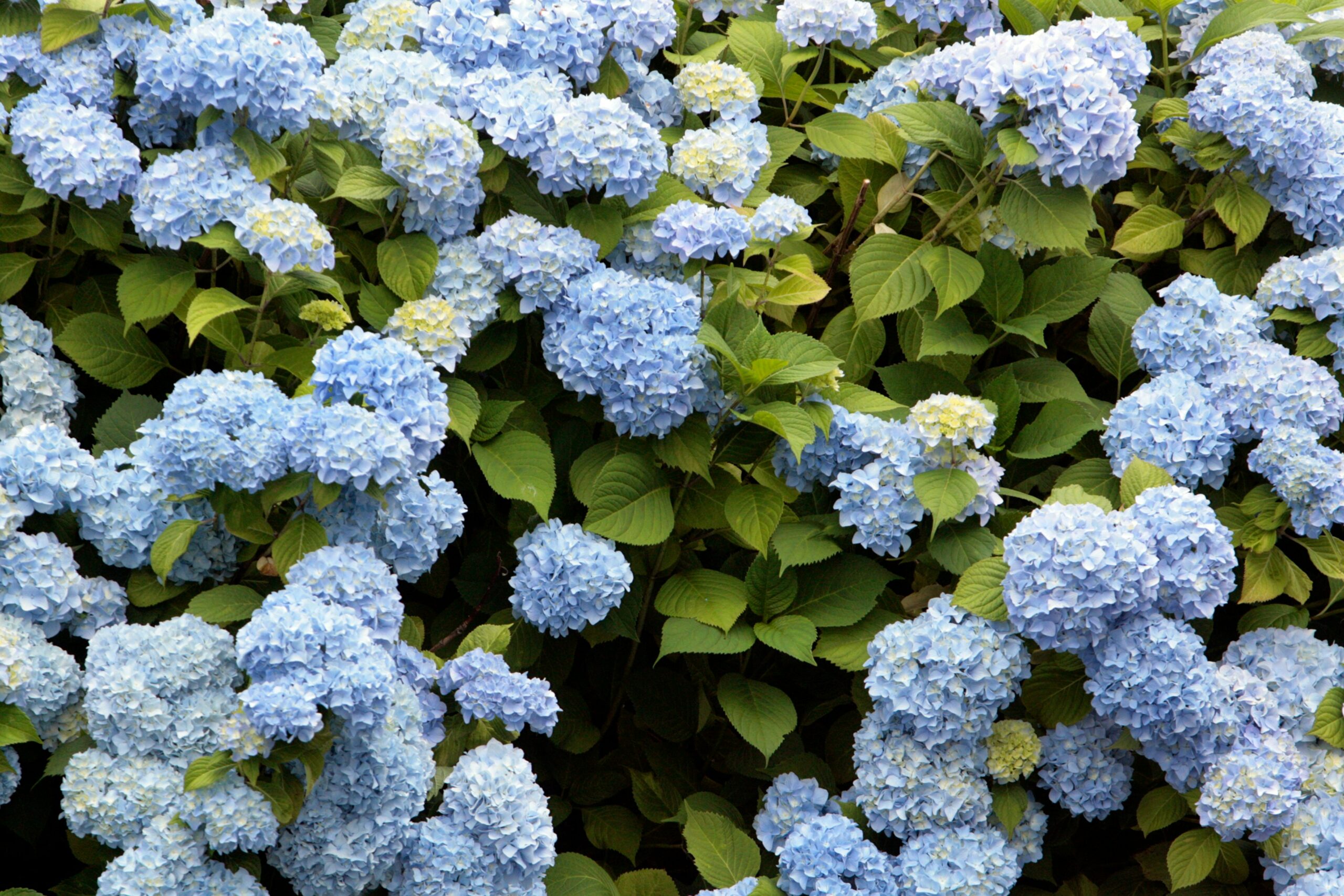
Few garden disappointments are as confusing as a hydrangea covered in healthy green leaves but completely missing the flowers you expected. If you have been asking, why are my hydrangeas not blooming, the answer is usually not that the plant is unhealthy overall. In many cases, the shrub is growing vigorously but something has interrupted the process of forming, protecting, or producing flower buds.
The complication is that not all hydrangeas bloom the same. Both Bigleaf and oakleaf hydrangeas develop their blooms on the old wood, while panicle and smooth hydrangeas on new wood. This makes a big difference in your fertilizing schedule or winter damage tolerance.
Thus, prior to adding more fertilizer or cutting this plant again, learning the type of hydrangea you have & what happened last year to benefit you very much.
The First Question: What Kind of Hydrangea Do You Have?
A surprising number of flowering problems begin with the wrong assumption about the plant.
All hydrangeas are not created equal when it comes to the time they flower and the pruning they need. Common garden hydrangeas include bigleaf hydrangea (Hydrangea macrophylla), panicle hydrangea (Hydrangea paniculata), smooth hydrangea (Hydrangea arborescens), and oakleaf hydrangea (Hydrangea quercifolia). Bigleaf and oakleaf generally flower on old wood.
All that means is the stems that grew a year or more ago produce flower buds for that new year.
Panicle and smooth hydrangeas bloom on new wood. This means growth that is produced this year sets flower buds and then these new shoots bloom this year. But there are the modern rebloomers, including some members of the Endless Summer series of plants. Their flowers develop on both new growth and older stems and they are somewhat forgiving about any winter killing of previous years buds.
That distinction gives you the first major clue when diagnosing a non-blooming hydrangea.
Why Are My Hydrangeas Not Blooming? Start With These 9 Causes
1. You Pruned the Hydrangea at the Wrong Time
Incorrect pruning is one of the most common explanations for a hydrangea that grows beautifully but produces few or no flowers.
It’s a particular problem when it comes to old-wood bloomers, since bigleaf hydrangeas produce next season’s flowers in late summer and early fall. You risk cutting off flowers for the following season if you prune them after the buds have set. Oakleaf hydrangeas, because they’re old-wood bloomers as well, tend to respond best to pruning just after flowering rather than after leaf drop, either, as their next season flowers bud before fall. Timing differences between panicle and smoothhydrangeas, you notice, don’t really factor in as much here since their flowers grow fromnew wood.
How to fix it
First identify the species or cultivar before making another cut.
If an old-wood hydrangea has already been pruned at the wrong time, there may be little you can do to restore those removed buds for the current season. The better approach is to allow new growth to develop and adjust your pruning schedule for the following year.
For bigleaf hydrangeas, pruning after flowering and before the plant has developed the next season’s buds is generally the safer approach. Exact timing varies with climate and cultivar.
2. Winter or Late Frost Destroyed the Flower Buds
Sometimes the gardener did everything correctly and the weather caused the problem.
This is particularly important with traditional bigleaf hydrangeas because their flower buds can be carried on old stems through winter. A severe winter or late spring freeze can damage those buds while leaving much of the plant looking alive and healthy.
That creates one of the most frustrating situations in the garden: lots of green leaves, vigorous shoots, and no flowers.
The plant may have survived, but its flower buds did not.
Penn State Extension notes that early or late freezes can damage the flower buds of bigleaf hydrangeas, making winter frost damage to hydrangeas an important consideration when diagnosing a season without blooms. This is one reason gardeners in colder climates sometimes experience a season of foliage without the expected blooms.
How to fix it
If winter injury is the cause, there may be no simple way to revive those aborted buds. Best to concentrate on preserving the buds from future damage during the next dormant period.
Do not prune live wood on old-wood hydrangeas more than necessary. If it is typical in your area to have winter bud kill, choose a hydrangea variety that blooms on both old and new wood, or choose a colder-hardy hydrangea for your climate.
3. Your Hydrangea Is Not Getting Enough Light
Hydrangeas are frequently mischaracterized as shade-loving flowers.
Many species will do well in-and even favor-partial shade, but too much shade will lead to fewer blooms. In fact, insufficient light “is among the first things that is investigated when hydrangeas do not blossom” according to Illinois Extension. This is particularly common when the shrub is growing where it has slowly become more shadowed. For instance, nearby trees could have matured, a fence could be erected nearby or more abundant undergrowth could have developed to intercept the sun during several hours of the day.
How to fix it
Watch the plant throughout the day rather than judging sunlight from a single moment.
If the shrub receives very little direct or bright filtered light, consider whether another location would be more suitable. However, do not automatically move every struggling hydrangea into intense afternoon sun. The ideal exposure depends on the species, climate, and local conditions.
Panicle hydrangeas, for example, are generally more tolerant of sun than many other hydrangeas. Oakleaf hydrangeas can also tolerate a range from full to partial sun, depending on growing conditions.
4. You Are Encouraging Leaves Instead of Flowers With Too Much Fertilizer
A hydrangea bush with giant green leaves could appear to be healthy and well-cared for, but if too much nitrogen is present in the soil, it’ll cause the plant to focus on leafy growth instead of producing masses of colourful blooms which all of us want from a hydrangea. Often we think more fertiliser is the answer to plant ailments and while this might be the solution, if the nutrients are available to plants in the soil anyway then additional applications of fertiliser, specifically a high nitrogen formulation may simply create more greenery instead of further flowers creating a growing plant which is larger yet doesn’t actually flower as much more as before!
How to fix it
Do not fertilize automatically every time a hydrangea fails to bloom.
Instead, consider the entire growing environment. A soil test for garden plants can provide useful information when nutrient deficiency is genuinely suspected. Fertilizer should be based on the plant’s needs and soil conditions rather than the assumption that more nutrients equal more flowers.
Remember that a lack of flowers can result from pruning, weather, light, or cultivar characteristics even when soil fertility is perfectly adequate.
5. The Plant Is Too Young or Still Establishing
A newly planted hydrangea may not behave like an established specimen.
Transplanting can temporarily shift the plant’s priorities toward root establishment and vegetative growth. If you recently moved or planted the shrub, it may need time to settle into its new location.
This is especially relevant when gardeners compare a young plant with a mature hydrangea growing nearby.
How to fix it
Give a recently planted hydrangea consistent care rather than repeatedly changing its conditions.
Maintain appropriate moisture, avoid unnecessary pruning, and allow the root system time to establish. Smooth hydrangeas, for example, are recommended by University of Minnesota Extension to receive a season or two of growth before serious hard pruning.
6. Drought Stress or Inconsistent Moisture Is Holding the Plant Back
Hydrangeas prefer to be consistently moist, especially during the main period of growth. A plant that continues to suffer acute periods of water stress will struggle to remain productive with strong, sustained growth and flowering.
The opposite can equally be the case if the soil remains poorly drained for too prolonged a time.
The objective is not, necessarily, ‘wet ground’, but to have suitable moisture without having continuously sodden roots.
How to fix it
Check the soil around the root zone rather than relying only on the surface.
If the soil dries rapidly, improve the growing environment with appropriate organic matter and mulch while keeping mulch away from direct contact with the stems. During dry periods, water deeply enough to moisten the root zone rather than providing frequent, shallow sprinkling.
If the area remains waterlogged, improve garden soil drainage before adding more water.
7. You May Be Removing Flower Buds Without Realizing It
People typically suggest deadheading be a no-brainer that helps flowering shrubs maintain their neat and tidy appearances. For hydrangeas though, the timing can be somewhat of an issue.
For a type of hydrangea that flowers from last year’s wood and branches, hacking away the branches following the flush of bloom has the tendency to impede their next spring flower production. The gardener thinks it’s the best way to ‘tidy it up’, but in effect it may have been stripping the blossom heads of the next bloom!
How to fix it
Know whether your plant flowers on old or new wood before doing major pruning.
– Old wood Hydrangeas. You need enough stem length structure left on healthy ones to develop the blossom buds for next season; these usually flower on year-old wood. – New Wood Hydrangeas Panicle and smooth hydrangeas, like Pee Gee, French and Annabelle, are more forgiving because flower buds form on current season new wood so pruning timing can be more flexible.
8. The Plant Has Been Damaged by Animals or Other Physical Stress
Winter conditions are not the only threat to old stems.
Browsing animals can damage the stems that carry flower buds. University of Minnesota Extension specifically recommends protecting bigleaf hydrangeas from rabbit browsing during winter.
If the ends of stems have been repeatedly eaten or stripped, the plant may have plenty of foliage near the base but lack the intact older wood needed for flowering.
How to fix it
Inspect the stems rather than looking only at the leaves.
Look for missing bark, clipped stems, broken branches, or obvious signs of animal browsing. If damage occurs regularly, physical protection may be more useful than additional fertilizer.
9. You May Be Expecting the Wrong Kind of Bloom From the Cultivar
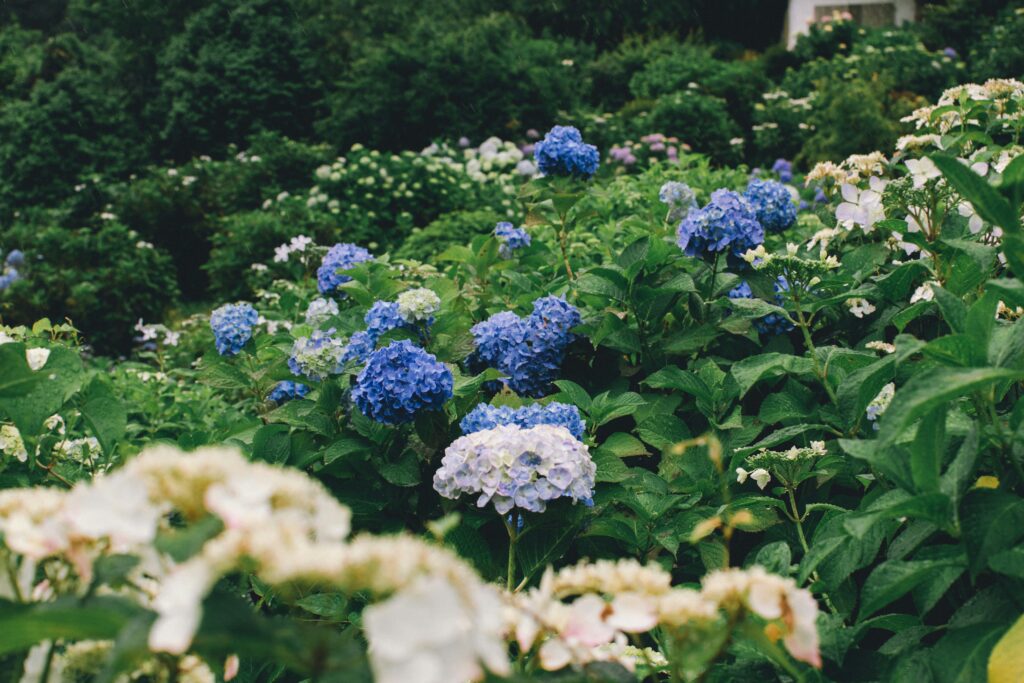
The panicle type hydrangea Hydrangea ‘Limelight’.“Every hydrangea is a little different from the next, with variations in flower shape, type, and blooming time.” Some Panicle Hydrangea can bloom on cones as shape of the flowers as can do Mophead Hydrangeas.
Not to forget, there are many Hydrangeas which bloom on old and new stems growth.”
That’s why many garderns are of the mistaken belief that all hydrangea flowers ought to grow on the SAME EXACT TIME, the pruning should influence in THE SAME EXACT MANNER.
They do not.
How to fix it
Find the plant tag if you still have it, identify the cultivar, or compare its foliage and flower structure with reliable horticultural references.
Once you know the species, its pruning and flowering behavior becomes much easier to understand.
A Simple Diagnostic Process for a Non-Blooming Hydrangea
Instead of changing five things at once, work through the problem logically.
Step 1: Identify the hydrangea
Determine whether you have a bigleaf, oakleaf, panicle, smooth, climbing, or reblooming type.
Step 2: Look at the stems
Are last year’s stems still present? Are they alive, dead, broken, or damaged?
Step 3: Review your pruning history
Ask yourself when you last pruned the plant and how aggressively you cut it back.
This is often the key piece of information for old-wood varieties.
Step 4: Examine the light
Observe how much sunlight reaches the plant during the day and whether nearby trees or structures have changed its exposure.
Step 5: Check moisture and drainage
Feel the soil around the root zone. Determine whether the plant is repeatedly drying out or remaining excessively wet.
Step 6: Think about winter
If the plant normally flowers but suddenly failed after an unusually cold winter or late frost, weather-related bud damage deserves serious consideration.
This process is more reliable than immediately reaching for fertilizer or pruning shears.
What About Hydrangea Soil pH?
Soil pH receives enormous attention because it can influence flower color in certain bigleaf hydrangeas.
But flower color and the flowering process are two different issues.
Soil pH is a factor for whether bigleaf hydrangea has blue flowers vs. Pink, though, due to the presence of aluminum, Penn State Extension says on its website . . . “This is not to suggest that a soil pH adjustment remedy will result in blooms for a hydrangea that produces no flowers.”
“For instance, one may notice his hydrangea is green with leaves but without flowers.
Some might conclude, then, that he should lower his soil’s pH value. However, if his problem is a dead flower bud killed during last winter’s frigid weather conditions, any attempts at adjusting the soil’s pH will not reanimate the existing dormant flower buds. Therefore,soil amendments are applied for specific purposes rather than as a panacea to many a problem.”
Should You Cut a Hydrangea All the Way Back?
That depends entirely on the type.
Bigleaf and oakleaf hydrangeas are another story. Severe pruning at the wrong time removes the stems that form next season’s flower buds. It is crucial to know whether the hydrangea is an old-wood, new-wood or new-wood blooming hydrangea before you start pruning, according to UGA Extension. Smart rule to follow: always identify before pruning.
Common Mistakes That Can Make the Problem Worse
When hydrangeas don’t bloom, stress and frustration often result in us doing even more than before – but this can make identifying the cause more difficult. Over- pruning simply because the hydrangea “looks untidy”, fertilizing out of necessity without first testing the soil for nutrient deficiencies, or transplanting in frustration before allowing the natural change of seasons. An approach of identifying and changing only one key factor at a time, and monitoring your plant through a full growing season, will result in the correct diagnosis more often.
Be sure to note also that a hydrangea may be perfectly healthy, even though it isn’t flowering this season.
This aspect of healthy plants with flowering issues, is noted here under Pennsylvania State University’s garden advice.
How to Encourage Better Hydrangea Blooms Next Season
Once the probable trigger is pinpointed, the fix often begins by keeping things simple for your shrub. Whether it needs more, less or just different light than you’re currently providing, the water and soil pH is on track, too much high-nitrogen feed is thrown at it year after year, and the timing for shearing matches its flowering style is where the solution normally lives.
If you’re struggling with plant damage year after year from the cold, or even more often, from yourself pruning it when it will not bloom later, try a new breed of flower, reblooming a bit, or that just do better in your area from. Several reblooming cultivars of bigleaf hortensia may develop flowers on either older growths and newer season growths; this give that second chance in order the first buds get damaged to flower again.
Conclusion: Why Are My Hydrangeas Not Blooming?
If you keep wondering why are my hydrangeas not blooming, resist the urge to assume the plant simply needs more fertilizer or water. The more likely answer is found by looking at the plant’s flowering cycle, pruning history, light exposure, winter conditions, and growing environment.
Bigleaf and Oakleaf Bigleaf hydrangea For many traditional bigleaf ( Hydrangea macrophylla ) and oakleaf ( Hydrangea quercifolia ) hydrangeas, the key lies in the fact that they flower on old wood (wood produced last year). Remove last year’s wood—whether accidentally, through an ill-advised pruning, winter cold, or animal damage—and you may also remove the buds that would produce next year’s flowers.Panicle and Smooth Panicle ( Hydrangea paniculata ) and smooth hydrangea ( Hydrangea arborescens ) hydrangeas are more resilient; both produce flowers on new wood (wood made this season).
The remedy, consequently, isn’t a single tip.
Figure out which plant you have, where it puts on flowers, and then adapt your regimen to work with that biology. After you know which kind you’re tending, a season with only leaves may seem far more obvious, far less mysterious.
Frequently Asked Questions
1. Why are my hydrangeas not blooming but growing leaves?
Healthy, non flowering leaves usually relate to problems with flower bud initiation or survival rather than an unhealthy plant. Most typically the problem is:• Insufficient light• Poor pruning• winter injury• A cultivar which flowers on old growth buds which have been destroyed or rubbed out.
2. Will fertilizer make my hydrangea bloom?
It’s not always that easy! Fertilizer simply cannot fix lost flower buds due to poor pruning practices, or bud killed off over the winter. Too much nitrogen and it promotes huge, leafy plants instead! So figure out the actual reason prior to trying the chemical solution.
3. Should I prune my hydrangea if it has no flowers?
Don’t trim out everything on sight. Try to determine which kind of hydrangea it is and if it blooms on the oldwood or newwood. Old or newwood depends on the variety; bigleaf, oakleaf and mountain hydrangeas bloom on oldwood; panicle and smooth hydrangeas bloom on newwood.
4. Can too much shade prevent hydrangeas from blooming?
Yes. Hydrangeas need different amounts of light, but a lack of it may result in fewer flower buds being initiated. If the plant has been gradually more shaded by nearby trees or buildings then this might contribute to decreased flowering.
5. Why did my hydrangea bloom last year but not this year?
A surprising drop in bloom can stem from a recent change in pruning, injury from late frost or winter damage, poor light or just environmental stresses. For hydrangeas that bloom from old wood, environmental extremes can damage last year’s bloom bud.
6. Does soil pH affect whether hydrangeas bloom?
When people talk of “soiling,” flower color of bigleaf hydrangeas is the factor that immediately comes to mind and that is not reason alone to assume that no flower buds will develop. Pruning and winter-damage are other potential cause.
7. Which hydrangeas bloom on new wood?
Panicle hydrangeas(Hydrangea paniculata) andsmooth hydrangeas(Hydrangea arborescens) set flower buds on new-season growth, so are usually more forgiving of dormant-season pruning than old-wood hydrangeas.