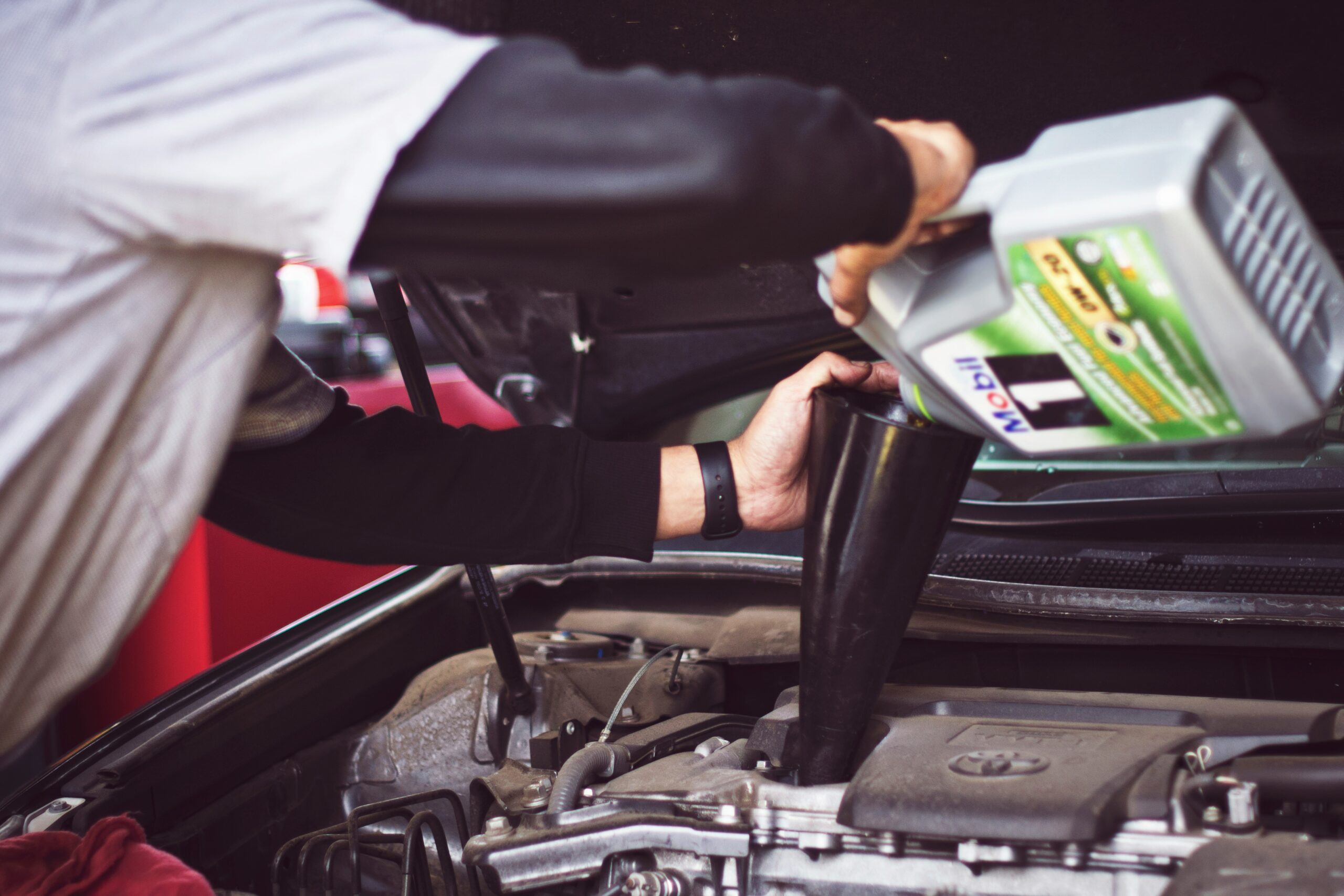
If you’ve ever opened your hood and wondered, do you check oil with car running, you’re not alone. Engine oil checks seem simple, but doing them at the wrong time can make the reading confusing or inaccurate. For most vehicles that use a traditional oil dipstick, you should turn the engine off before checking the oil level.
Should the engine be running when you check the oil level? Generally, no. The normal process is to park the vehicle on level ground, switch off the engine, allow the oil to settle for the amount of time specified by the manufacturer, and then check the dipstick.
However the actual procedure is a bit vehicle specific. Some manufacturers say to check after it has come to operating temp, others will give a cold check procedure. That is where following the owner’s manual needs to be primary to the general ‘rule’.
Why People Ask, “Do You Check Oil With Car Running?”
The confusion usually comes from the difference between checking warm oil and checking oil while the engine is running.
They are not the same thing Your vehicle may specify that the engine gets hot before you take it of oil but that is not to say that you should run the engine for your new dipstick. When the engine is running, oil is circulating around the engine through the oil pump oil leaves the oil pan that is to say at least some leaving. After you turn off the engine, the oil starts moving back to the oil pan that enables the measurement to stabilize.
This is why the answer to do you check oil with car running is usually no for a conventional dipstick.
Do You Check Oil With Car Running or Turned Off?
For most vehicles with a traditional dipstick, check the oil with the engine turned off.
A typical process looks like this:
- Park on level ground.
- Put the vehicle in the appropriate park or neutral position according to the manufacturer’s instructions.
- Apply the parking brake.
- Turn the engine off.
- Wait the recommended amount of time.
- Remove and clean the dipstick.
- Reinsert it completely.
Toyota, for example, publishes procedures that involve warming the engine, switching it off, and waiting several minutes before checking the dipstick according to its engine oil level checking procedure.
So if you’re specifically asking, do you check oil with car running, the safest general answer is no unless your vehicle’s manufacturer specifically instructs you otherwise.
Why You Shouldn’t Normally Check the Oil While the Engine Is Running
There are two major reasons.
The Reading May Not Represent the Normal Oil Level
All engine oil circulates all of the time when the engine is running.
Oil is pumped out from the oil pan to many engine components, passages and circuits. Hence, how much oil remained in the oil pan and how much oil you could find after turning off engine and waiting could not be same.
Dipstick has been developed by manufacturer as to get a proper measurement by some certain procedure that defines by manufacturer itself.
If you disregard the procedure, you may misunderstand the reading.
There Are Safety Concerns
The engine is a hot, moving component while running. The type of vehicle determines whether you may have belts, pulleys, fans, and other moving components under the hood. You may also find that engine surfaces and exhaust parts become very hot. Usually, there is no need to place your hands near a running engine just for the purpose of checking the oil using the standard dipstick.
That is another reason the answer to do you check oil with car running is generally no.
Should You Check Oil When the Engine Is Hot?
This depends on the vehicle.
Some manufacturers recommend checking engine oil after the vehicle has reached normal operating temperature.
Others may provide different instructions.
For example, Toyota’s published instructions can call for bringing the engine to operating temperature, turning it off, and waiting several minutes before checking the oil.
Notice the distinction:
Warm engine: Sometimes required.
Running engine: Usually not required for a traditional dipstick.
Therefore, if you’re searching do you check oil with car running, don’t confuse “check when warm” with “check while running.”
How to Check Engine Oil Correctly
If your vehicle uses a standard dipstick, use the following general procedure as a guide.
Parking on Level Ground
Try to park on level ground in order to ensure that the oil is properly distributed in the oil pan.
Avoiding steep slopes during the parking is crucial.
Turning Off the Engine
Once the car is parked, turn off the engine.
This is your answer to do you check oil with car running: in case of a standard dipstick, the engine should be turned off
Waiting
Now, allow the oil to settle in the oil pan.
The precise amount of time needed to wait is determined per vehicle so it might be a good idea to refer to the owner’s manual rather than a website. You do not want to risk improper oil level checking by waiting too short or too long.
Looking for the Dipstick
Now, you have to locate the engine oil dipstick. If you do not know where it is, do not speculate and refer to the owner’s manual instead.
Removing the Dipstick
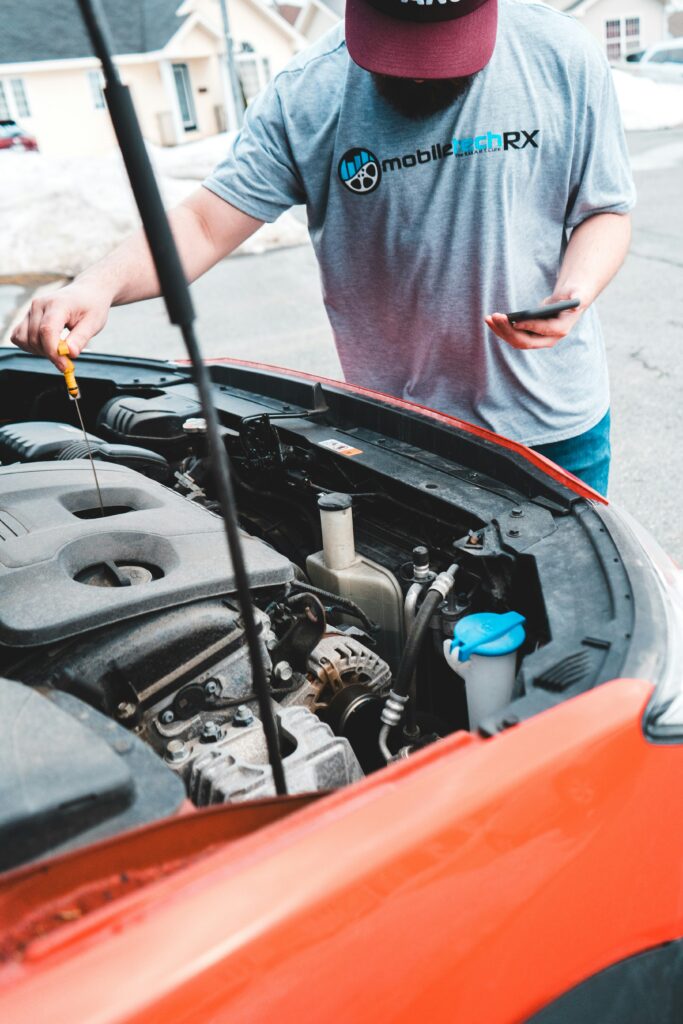
Then, remove the dipstick and wipe the end that indicates the measurements.
By doing this, you will remove the oil from the end of the dipstick for a more accurate reading.
Inserting the Dipstick Back In
You have to push your dipstick back in fully to ensure that there are no gaps preventing it from delivering the correct information.
The Step of Removing and Reading
Next, remove the dipstick again to read the indication. The dipstick usually shows MIN/MAX, LOW/FULL, or other markings on it that you can understand by looking at two dots or some other signs. How to read your particular dipstick is explained in the owner’s manual.
What If the Oil Level Is Low?
You may need to add the proper engine oil if the level drops too low.
Do not add too much at any given time. Add just enough, letting it settle if needed, and check the level again. Overfilling the engine will also cause problems. In fact, Toyota explicitly warns against adding too much engine oil. The consistent need for oil between changes doesn’t simply mean there is a problem that can be solved by continually topping it off; it likely signals a leak or the problem of too much consumption.
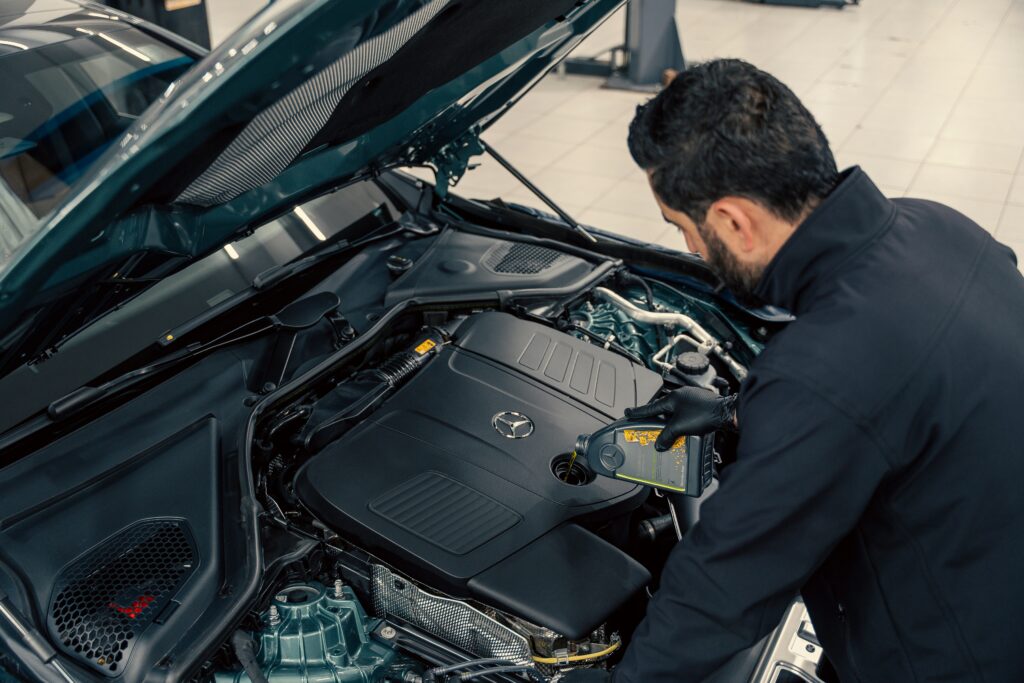
What Happens If You Check Oil While the Car Is Running?
2. Your dipping will not tell you the real amount of oil, while engine is at speed. 3. You can make for trouble: working over alive engine. 4. If you are still thinking “do you check oil with car running?Park the car on a level surface, shut off the engine, wait briefly, and then use the dipstick to measure the oil level. car’s instructions, if it doesn’t tell you, then with same height) The following steps do not work on all cars (because of their design – for instance if the stick holder is very short), but in general they’ll work.
Can You Check Oil Immediately After Driving?
You can check the oil after driving if your vehicle’s instructions call for a warm-engine measurement.
However, don’t immediately pull the dipstick while the engine is still running.
Instead, park safely, shut the engine off, and follow the manufacturer’s instructions regarding how long to wait.
This distinction is particularly important when answering the question do you check oil with car running.
You can check oil after driving.
That doesn’t mean you should check it while driving or while the engine is running.
What If Your Car Doesn’t Have a Dipstick?
Not every modern vehicle uses a traditional physical dipstick.
Some vehicles use electronic oil-level measurement systems that display the oil level through the instrument cluster or infotainment screen.
In these vehicles, the correct procedure can be completely different.
The system may require:
- The car needs to be on level ground before checking the oil.
- The engine to be off
- A specific engine temperature
- A particular ignition setting
- A waiting period
- Following a menu-based measurement procedure
Therefore, don’t assume that the traditional dipstick method applies.
If your vehicle doesn’t have a dipstick, consult its owner’s manual.
Common Mistakes When Checking Engine Oil
Checking While the Engine Is Running
This is the biggest issue related to do you check oil with car running.
For a conventional dipstick, turn the engine off unless your manufacturer specifically says otherwise.
Checking on a Hill
The oil on an angle can give a false reading.
Try to park on a level surface when checking oil.
Checking Too Soon
If you turn off the engine and check the oil right away, the reading can be inaccurate since some of the oil is still being circulated.
The best way to check the oil is to wait for the recommended amount of time after turning off the engine.
Adding Too Much Oil
Don’t assume that just because the level of the oil is below the line that marks a full tank that you will have to add several gallons.
Add oil slowly and recheck the oil level to make sure you didn’t overfill the tank.
Using The Wrong Oil
Make sure to use the recommended oil for your engine not just the recommended weight.
The viscosity of the oil is important but so is the manufacturer’s engine oil specification.
Ignoring Repeated Underfills
If you are repeatedly getting a low oil level make sure to find the cause.
You could be leaking oil or your engine could be burning oil.
Instead of just filling your oil each time you should find the problem and solve it.
Does the Oil Need to Be Cold?
Not necessarily.
This is another common misunderstanding.
Some people believe oil should always be checked when the engine is completely cold. Others believe it must always be hot.
Neither statement applies universally.
The correct procedure depends on the vehicle.
Some manufacturer procedures specifically call for checking oil after the engine has reached operating temperature and then been shut off.
Therefore, if you’re wondering do you check oil with car running, the more useful question is:
What does my vehicle manufacturer recommend for checking oil level?
That answer will tell you whether the engine should be cold or warm and how long you should wait after switching it off.
What Is the Difference Between Oil Level and Oil Pressure?
The two sometimes gets mixed up The dipstick is concerned about oil level. An oil-pressure warning system covers another condition. The dipstick may be giving a fairly accurate picture of your oil level while an oil-pressure problem exists. If a light on you dashboard to your oil-pressure comes on, does not think automatically that changing or looking at you oil dip stick would make an oil-pressure problem go away and can demand immediate action.
Does Dark Oil Mean It Needs to Be Changed?
Not necessarily.
Engine oil often becomes darker as it circulates through an engine.
Color alone isn’t a reliable way to determine whether the oil needs to be replaced.
Instead, follow the vehicle manufacturer’s recommended maintenance schedule and oil specification.
If you’re checking oil because you’re concerned about maintenance, look at the service records and owner’s manual rather than relying solely on appearance.
How Often Should You Check Your Oil?
There isn’t a definitive single frequency which applies to all vehicles and motorists.
Your car’s owner manual will specify a recommended interval to check. However, a driver might need to check it more frequently if the car is older or was previously burning or leaking oil. Regular checking provides the opportunity to note a drop in oil level before a problem develops. A sudden decrease is particularly worth noting when following a vehicle maintenance checklist.
When Should You Get Professional Help?
A dipstick can tell you the oil level, but it cannot diagnose every engine problem.
Professional inspection is appropriate if:
- The oil level repeatedly drops
- You see oil underneath the vehicle
- The engine makes unusual noises
- An oil-pressure warning appears
- The engine develops smoke or unusual odors
- You’re unsure which oil specification to use
- The oil level suddenly becomes extremely low
- Your vehicle uses an electronic oil measurement system you don’t understand
A technician can investigate leaks, oil consumption, lubrication problems, and other mechanical issues.
A Quick Checklist for Checking Engine Oil
Before checking your oil, remember:
1. Park on level ground.
2. Turn the engine off.
3. Follow the manufacturer’s waiting period.
4. Locate the correct dipstick.
5. Wipe it clean.
6. Reinsert it completely.
7. Remove it and check the markings.
8. Add the correct oil only if necessary.
9. Recheck the level after adding oil.
10. Investigate repeated oil loss.
This simple routine answers the central question: do you check oil with car running? For most traditional dipstick systems, you don’t.
Final Answer: Do You Check Oil With Car Running?
Do you need to keep the vehicle running to check the oil? For most vehicles equipped with a traditional engine-oil dipstick, no. The engine should generally be switched off before checking the oil.
The engine might have to be warmed up on certain vehicles. Once the engine is shut off, the procedure states that you should wait several minutes for the oil to return to the oil pan. Toyota provides this type of procedure.
The main takeaway is that there is no one right procedure, as some are electronic and others have the required temp and wait time specified by the manufacturer.
So whenever you’re unsure do you check oil with car running, remember the simple rule:
For a conventional dipstick, turn the engine off and follow your owner’s manual.
Don’t check simply because the engine is running, don’t add oil blindly, and don’t ignore a repeatedly low oil level. A few careful minutes spent checking the oil correctly can help you identify maintenance issues before they become more serious.
FAQs About Do You Check Oil With Car Running
1. Do you check oil with car running?
1. Usually, no. If your car has a traditional dipstick, turn the engine off while you check it. Check per the manufacturer’s recommendation for temperature and waiting period.
2. Can I check my engine oil right after driving?
Yes, if the manufacturer’s recommended procedure involves a warm engine. The engine should be turned off and you should wait the recommended amount of time before checking.
3. Do you check oil with engine running when it is warm?
Not typically. Usually, that would mean the engine is warmed up, then turned off for the oil-checking procedure.
4. What is the problem with checking the oil when the car is running?
The reading might not reflect the amount of oil the manufacturer specifies because the oil is circulating throughout the engine. Another issue is that you expose yourself to moving parts and hot surfaces.
5. Should the car be on level ground when checking the oil?
It is best to check on level ground because it allows the oil to settle in the oil pan for the most accurate reading.