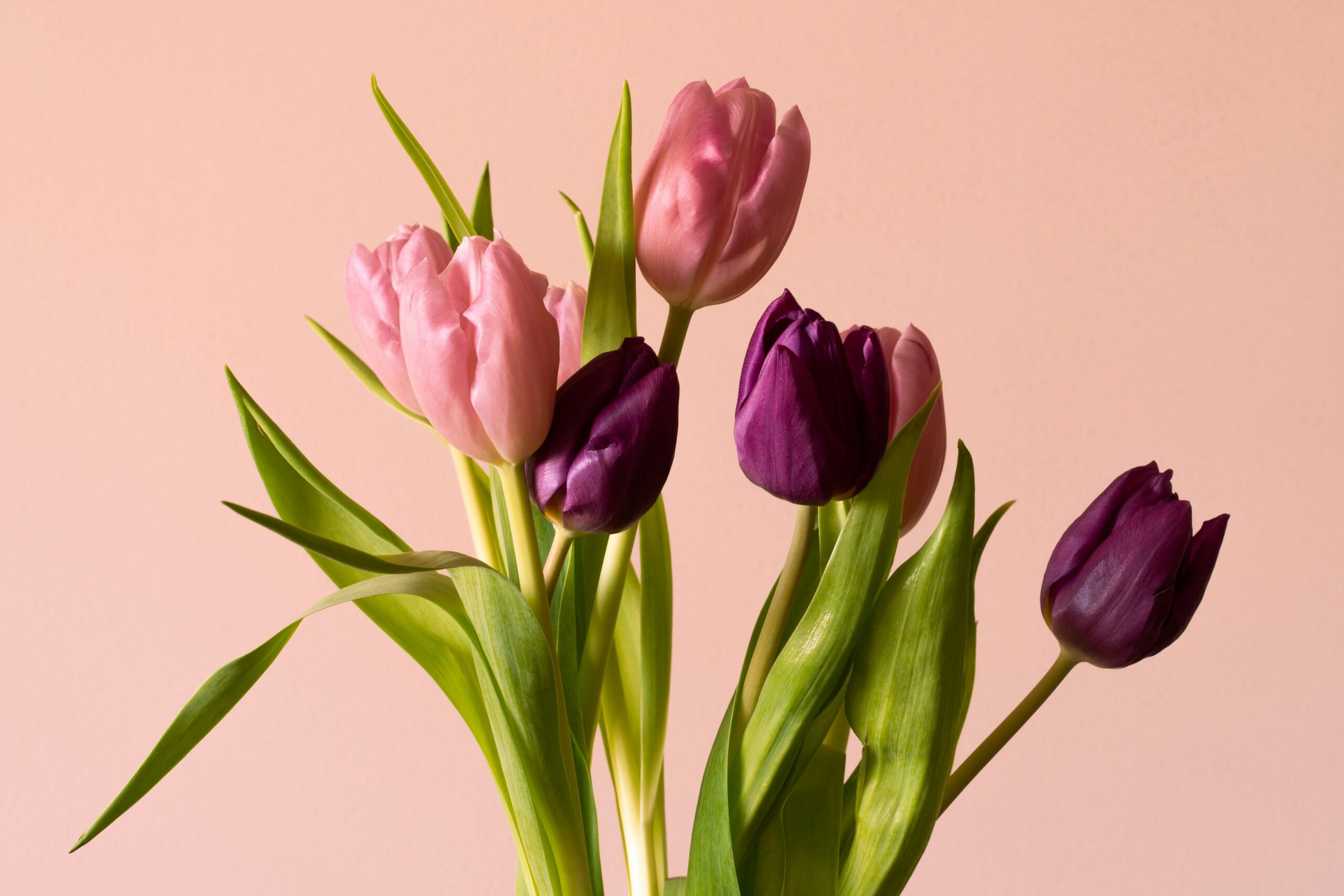
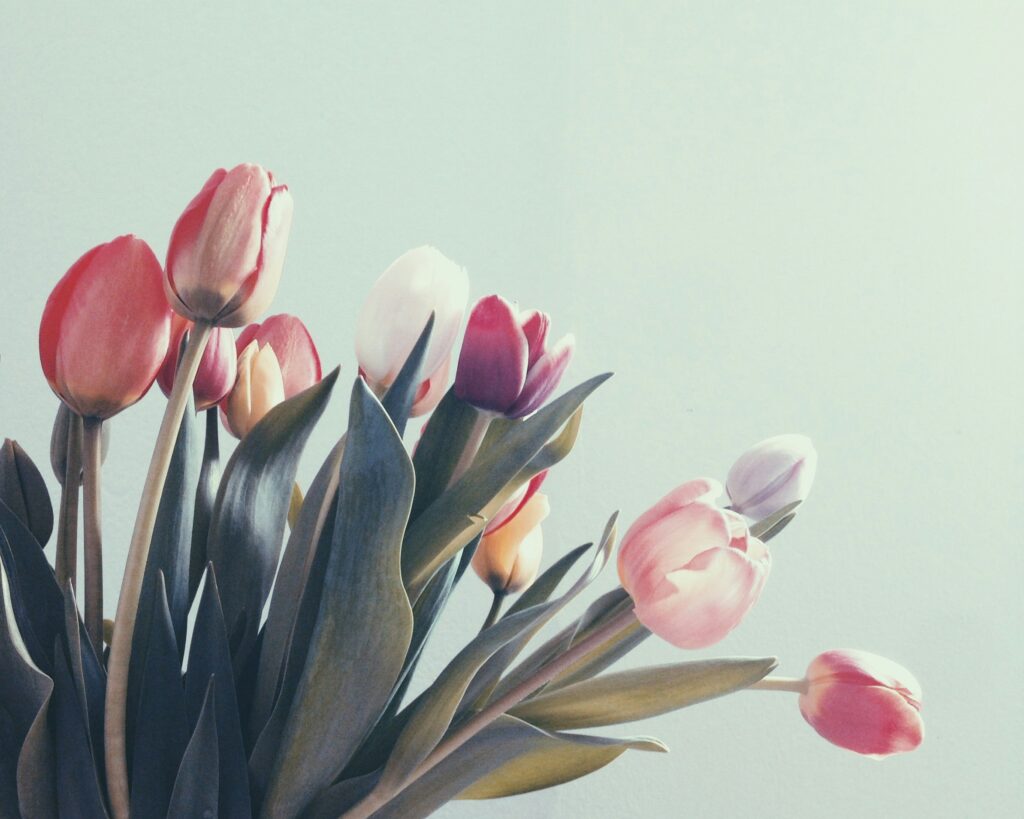
You wake up to find your tulips standing tall one day and leaning dramatically toward the ground the next. If you’re wondering, why are my tulips drooping, the answer isn’t necessarily that something is seriously wrong. Tulips naturally have flexible stems, and their flowers can bend as they mature. But sudden or excessive drooping can also signal problems with watering, temperature, light, planting conditions, or the health of the bulb.
The first point to establish is if the flower is an outdoor, garden tulip, or one that has been cut and is placed in a vase. The reasons for the bending may be a number of different factors. A cut tulip may bend because the stem is drying out or the weight of the flower head may have become too heavy, whilst an outdoor tulip may react to heat or water deficiency, weak growth or a bad environment.
Understanding that difference makes fixing the problem much easier.
Why Are My Tulips Drooping? Start With the Type of Tulip
Tulips are unique amongst cut flowers for having soft, bendy stems which carry on growing after you’ve put the tulip in water, and for this reason they often curve toward a light or droop their flower heads after a while even when healthy. But the flexible, bending stems on garden tulips can also just mean they’re subject to Wind, Rain, Weight of Head – none of which imply illness (says the RHS who rate them specifically for this in its ‘Dropping Tulips’ guide). So…
Don’t despair!
Take a close look at all of its elements.
1. The Tulip Isn’t Getting Enough Water
One of the simplest explanations for drooping is water stress.
Adequate watering for tulips is required while they are actively growing. Established tulips growing outside generally do not require additional watering if rainfall is sufficient, although continued dry weather can make them prone to the soil becoming too dry. The RHS suggests watering tulips in prolonged dry periods while they are growing, ensuring that they remain moist rather than soggy.
A containerised tulip is more likely to dry out more quickly than one growing in the ground, especially in warm windy weather.
How to check
Stick your finger into the ground surrounding the plant instead of into the bulb itself. If the topsoil feels dry and the plant appears droopy, it’s time to water.
Water until it penetrates the soil and reaches the root level. Don’t do a little dribble-and-drizzle routine because then the only part that is likely to be damp is the top layer.
However don’t forget that in the world of watering, “more isn’t always good”.
2. Too Much Water Can Also Cause Problems
The problem behind a drooping tulip is not, as it seems, that they are thirsty.
In fact, tulips require proper garden soil conditions. When soil remains saturated the air supply to roots can be diminished, and this can be the underlying cause of bulb & root problems. The RHS states that tulips perform badly in the wet, heavy, ill-drained Soils that, through constant wet, waterlog the bulb and can cause the bulb to rot; that is definitely a factor when tulips have been planted in containers that do not have effective drainage or in clay soil.
So, if the soil is soggy for an extended period, don’t water the plant again! Instead investigate their drainage.
Active growing tulips only require a moist, not wet soil.
3. Heat Can Make Tulips Bend
Tulips are cooler season spring flowers. In their natural environment, they flower when conditions are cool. Hot weather can speed up development of the flowers.
When the weather turns hot flowers might develop quickly, stems lose turgidity and plants might wilt more significantly than during cooler temperatures.
This explains why you may see your tulips perky and vertical in the morning, then appearing dramatically lax in the afternoon. Generally outdoor tulips do best with lots of sun, open planting space, good soil – extended hot weather is less of an issue but they won’t last quite as long with extreme heat. The issue is amplified when growing tulips in pots, as heat building up in and around the soil is often more severe and the soil loses moisture even quicker.
4. The Flowers Are Simply Getting Older
Sometimes the best answer to why are my tulips drooping is that the flowers are reaching the end of their display.
Once mature, tulip blooms will eventually droop and wilt, especially when fading and aging petals are falling off or even after blooming naturally. Check the entire plant You may not need to do anything. If you see green leaves, the stem looks healthy without discoloration or lesions, and the bloom is simply past its prime, then you don’t have a problem that needs solving.
This step is important, as you may do damage to your plants in trying to solve problems that aren’t problems in the first place.
All of your drooping blooms are not due to illness. If your tulips are grown outdoors, you should snip off the blooms before seed heads are formed, but allow your tulip foliage to come out. The foliage adds energy to your bulb even after your flowers bloom, as the leaf can still capture the energy of the sunlight and send it down to nourish and feed the bulb.
5. Your Tulips May Not Be Getting the Right Amount of Light
Light affects the way tulips grow.
Most tulips prefer full sun although some types tolerate partial shade.
Plants that don’t get enough light will often grow longer, weaker stems. A flower might then flop over because the stem is unable to support it properly. This will be more apparent if you plant your tulips close to a wall, under heavy foliage or in an area which has very limited direct sunlight exposure.
If you repeatedly get tulips that grew tall and limp rather than sturdy and upright, you should consider the planting position rather than just throwing some more fertilizer at it.
The thought is not necessarily to uproot a tulip in flower right away, just consider its position for your next planting.
6. A Heavy Flower Head Can Pull the Stem Down
Tulip flowers can become surprisingly heavy compared with their stems.
Double-flowered, parrot-tulips and similar large-flowered varieties will impose significant weight at the top of an otherwise relatively weak stem. This effect is accentuated when wind and rain contribute further. The result can be quite spectacular yet quite harmless to the plant.
This is especially true of cut tulips.
The RHS advises standing cut tulip stems (after they’ve started to droop) in deep water, rolled in newspaper, for at least two hours, preferably overnight, to try and get them straight. With garden tulips there is not necessarily a practical reason to straighten every stem. A gentle bend adds to their natural look. With regard to a persistent drooping problem with garden tulips, it would be far more practical to chose varieties with strong stems and to site them where appropriate, rather than tie up every flower individually.
7. Fresh-Cut Tulips May Be Drooping Because of Poor Water Uptake
Cut tulips require different treatment from bulbs growing outdoors.
Is it time for the dead bin with your tulips when they droop over the flower vase? Make sure the water is clean, the stems are working, or the flowers aren’t too warm Before getting carried away with getting rid of the bouquet, make sure to read our advice – wilt could be related to dirty water, too low a water level, a hot environment, and some damaged stems. Use fresh water and wash the vase: Once home, clean your vase – that means fresh water and, to ensure efficient water uptake, cut down stems (a clean, sharp tool will do) and insert into fresh water immediately.
A clean, straight cut for all flower stems, then placing prepared flower stems into clean, cool water for the first 24-48 hours so they can hydrate efficiently, as recommended by the RHS.
For tulips, an “in-depth” water treatment once the flowers have bent is advised.
Keep the arrangement in a cooler location away from intense heat and direct sunlight.
A simple way to straighten cut tulips
If your tulips are already bending:
- Clean the vase thoroughly.
- Recut the stems.
- Wrap the tulips loosely in newspaper so the stems are supported.
- Place the wrapped flowers deeply in clean water.
- Leave them for several hours or overnight.
- Remove the wrapping and return them to the vase.
The goal is to restore hydration while physically supporting the stems.
8. Poor Soil or Drainage Can Weaken Outdoor Tulips
Tulips spend most of their time beneath ground, so what occurs there is just as significant as what shows on the surface. Tulips do have preferences for garden soil; it’s often ideal to plant them in rich and well-draining soil. Extremely waterlogged and heavy soil may promote conditions that don’t benefit bulbs and it also encourages rot and other disease issues for bulbs.
Check out your intended planting spot following rain.
If water saturates the soil area for hours, your garden needs better drainage. Raised beds, a good soil blend or containers with drainage may be the solution for some plots. But don’t automatically feed the drooping bloom fertilizer. Nutrient deficiency isn’t the initial cause when one bulb withers.
9. Disease or Physical Damage May Be Responsible
Drooping becomes more concerning when it appears alongside other symptoms.
Watch for:
- Brown or gray spots on leaves or petals
- Distorted new growth
- Soft or rotting bulb tissue
- Unusual streaking
- Mold
- Severe discoloration
- Collapsing stems
- Repeated problems affecting many plants
Disease factors may cause troubles to tulips with possible tulip fire, grey molds and bulb rot. It also points out in the RHS list about different pest and disease causing issues when it comes to continuous planting of tulips in same plot of soil.
Whenever a particular plant seems quite diseased, maybe dispose off infected plant is a best method rather than resorting to a number of domestic cures and treatments. Avoid giving fungicide and different harmful chemicals to just about any struggling tulip. Before you do, ascertain if there any real sign of plant being diseased.
How to Tell Whether Your Drooping Tulip Needs Help
The easiest way to narrow down the cause is to examine several clues at once.
| What you notice | Most likely concern |
| Dry soil and limp plant | Water stress |
| Soggy soil and declining plant | Poor drainage |
| Flower bends but leaves look healthy | Natural growth or heavy bloom |
| Cut tulips bend soon after arranging | Poor hydration or water uptake |
| Long, thin stems | Insufficient light or growing conditions |
| Brown spots and distorted growth | Possible disease |
| Drooping after a warm spell | Heat or accelerated flower aging |
| Bulb feels soft or shows rot | Bulb disease or excessive moisture |
This approach is more useful than treating the symptom alone.
What Not to Do When Tulips Droop
A common gardening mistake is to react before identifying the cause.
When you are looking at a slumping tulip, please do not try and rectify it by drenching it with water without checking the soil conditions. If the roots are already sitting in soggy soil then adding more will not help.
Do not trim healthy tulip foliage back as soon as the flowers have faded simply for looks. Leaves feed the bulb and replenish its reserves, and it is recommended by the RHS to let the foliage fade to yellow before tidying.
Do not add fertilizer assuming it will straighten out a bending stem. It can help to feed the plant in appropriate circumstances but it is not going to make a naturally flexible stem stiff overnight.
How to Prevent Tulips From Drooping in the Future
It all starts before the blooms bloom. Plant tulips in the right type of soil – plenty of drainage is key. Select a sunny spot, “Most tulips need full sun,” say RHS gardeners, “as too much shade reduces blooms.”
Be guided by moisture when actively growing; there’s no set time to water container tulips because the soil, the sun and wind may all affect drying out.
Fill a clean vase and fresh water when cutting fresh ones, make stem-ends sharp, and keep them from direct heat. And if a stem bends, simply support it underwater rather than immediately calling the blooms beyond saving. Then make a note of which you picked. Some are lovely on the table, some are hardy repeat customers, and others may come and go with each season.
In fact, even many border tulips are grown as annual bedding – or single planting, as it’s often referred to, due to its unreliably reblooming nature.
However, some specific tulip types have a greater propensity to re-bloom.
When Drooping Is Normal—and When It Isn’t
There is a useful difference between bending and wilting.
An healthy tulip might have a tilted angle due to flexibility in the stem or weight of flower on the stem. If it’s a healthy tulip there is no cause for alarm. A withered tulip however appears drooping all over, be the leaves are weak, the stem is too weak and the state of the soil or the environment where the flower lies can clearly suggest there is water deficiency. Similarly , the presence of a single wilting flower on an otherwise healthy plant is less worrying than seeing your whole planting area suddenly slump together. It depends on the behaviour.
If it starts to spread all across an container of tulips after an few day of scorching hot days thenenvironmental stress becomes more reasonable to assume. If the affected tulip has a limp stalk as well as an unhealthy colour, whereas the adjacent one is perfectly happy, disease or an external obstruction need looking into far more closely
Conclusion: Why Are My Tulips Drooping?
So, why are my tulips drooping? The answer can range from something completely natural to a problem that needs attention. Natural and human-like: Tulips may wilt and fall over due to the natural flexibility of the stem, the weight of the flower and normal aging. As for freshly cut flowers, they might droop if not absorbing enough water, and in gardens, they can wither from lack of water and improper water and soil absorption, heat, light deficiency and even too damp conditions.
Before performing any actions on the flowers, it is always best to check the situation. Make sure conditions of soil, drainage and illumination are right, evaluate the stem and leaves, and for freshly cut flowers, try to change the water in the vase and re-cut the stems while supporting them. After that, the plants may restore. For tulips which grow in the garden, it is only necessary to maintain the normal growing conditions and to let the leaves fall away naturally after blossom.
Leaning doesn’t necessarily mean the whole tulip flower system is a failure, instead, it just represents the growing and aging of the flowers or some specific reaction to the surroundings.
FAQs About Drooping Tulips
1. Can drooping tulips recover?
Yes, depending on the cause. Cut tulips that are bending because of dehydration or poor water uptake can often improve after their stems are recut and placed in clean water with proper support. Outdoor tulips may recover from temporary water stress when growing conditions improve.
2. Should I water tulips when they are drooping?
Check the soil first. If it is dry, thorough watering may help. If the soil is already wet or soggy, adding more water can make the situation worse. Tulips generally need moisture during active growth but also require good drainage.
3. Why are my tulips drooping in a vase?
Cut tulips can bend because of poor water uptake, dehydration, warm conditions or their naturally flexible stems. Recutting the stems and placing them in clean water can help. Supporting bent tulips in water for several hours can also straighten them.
4. Why do tulips droop after they bloom?
When tulip bulbs finish, their stalks often nod or topple and flowers start to fail – this wilting after flowering stage is all just part of their life cycle; letting plants remain until they die off naturally enables storage for the following season.
5. Do Tulips Need Full Sun to Prevent Drooping?
Most tulips perform well in full sun, although some varieties tolerate partial shade. Insufficient light can contribute to weaker, elongated growth, so location can influence stem strength.
6. Should I cut off drooping tulip leaves?
Don’t cut back healthy green leaves after the flowers have finished blooming. The leaves continue to nourish the bulb after the blooms have gone. Only cut back the leaves after they turn yellow and die back on their own.
7. Are drooping tulips a sign of disease?
Not necessarily. Drooping by itself can be quite common. Bent symptoms of disease become apparent with other symptoms such as yellow-brown spots, distorted forms, and a rotted, moldy appearance, or when your plant starts losing a good bit of its color. These include tulip fire and bulb rot in tulips.