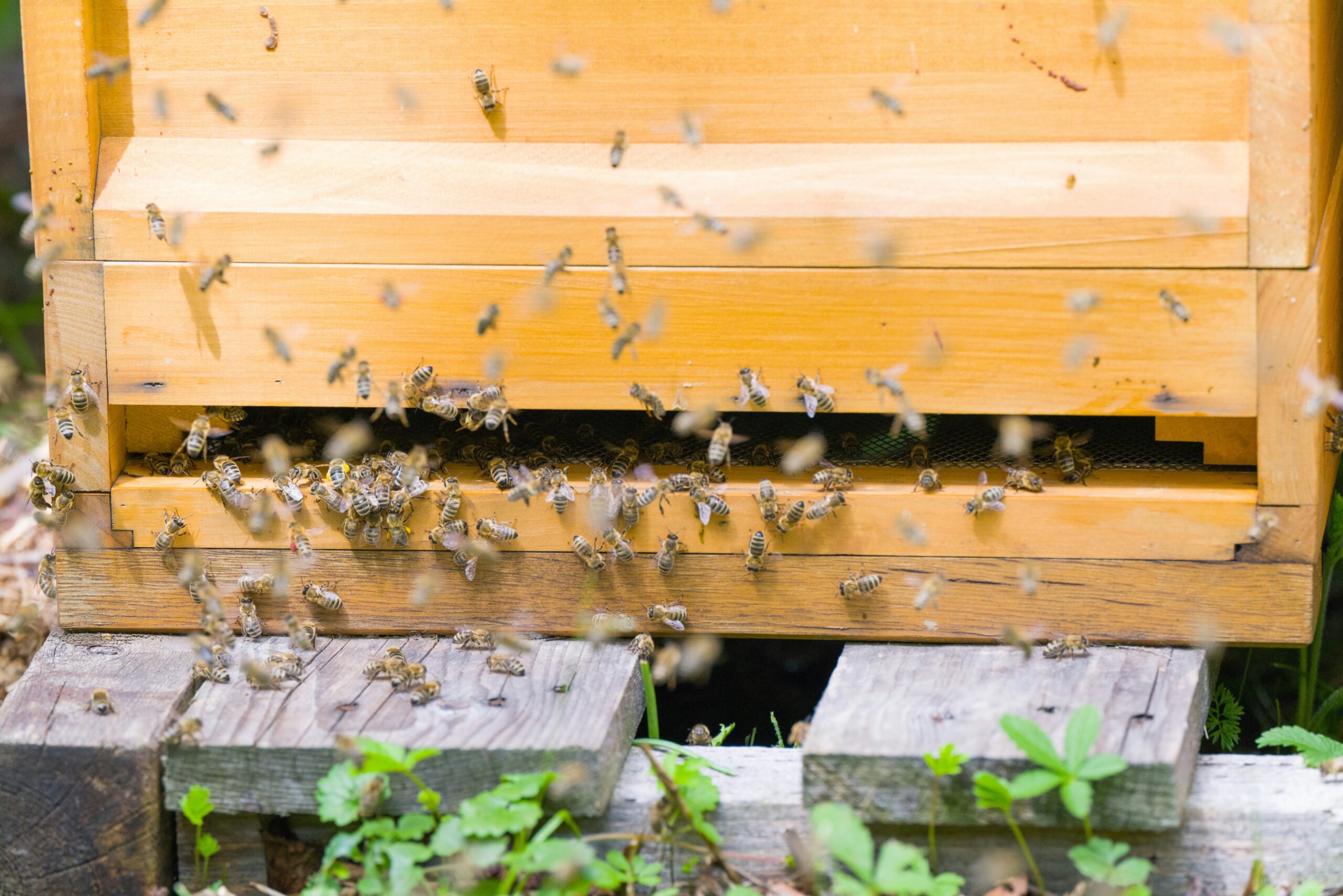
While many homeowners appreciate signs of warmer weather, blooming flowers, and plenty of bee activity, spring also means many people’s unwanted spring guest has likely returned. We’re talking about the carpenter bee!These large, solitary bees are frequently spotted hovering around decks, fences, eaves, porches, and wooden siding, leaving many people wondering how to get rid of carpenter bees before they cause structural damage.
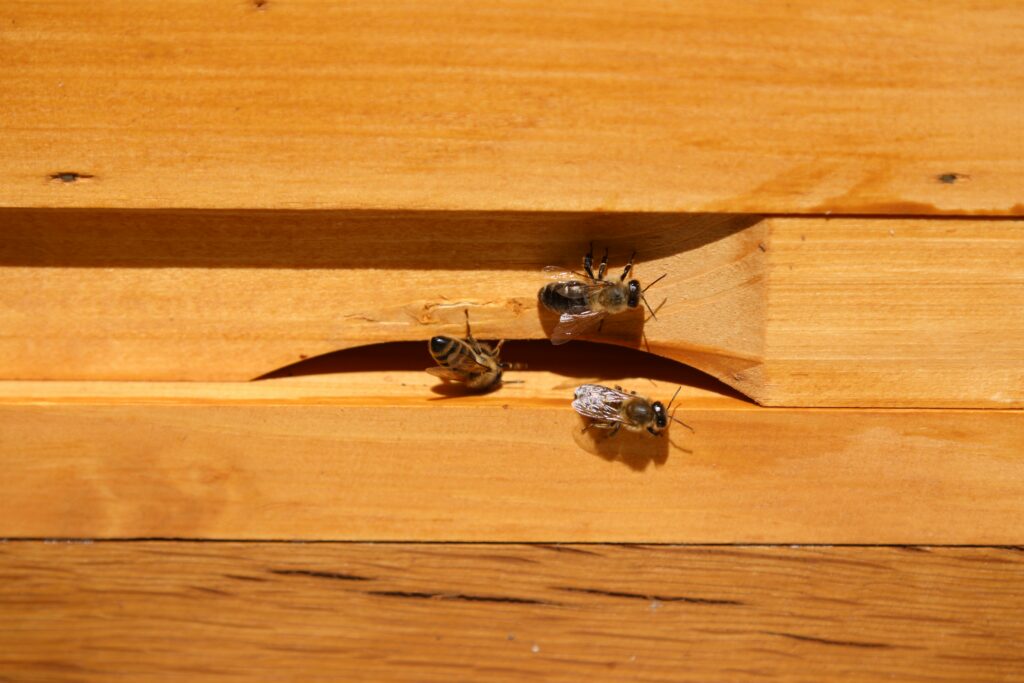
Carpenters bees look similar to bumblebees but behave quite differently. Instead of nesting in hives, female carpenters bee drill perfect, smooth round holes into non-treated, unpainted, or weathered wood. Although one single nesting rarely damages a house, continued nestings in the same place can weaken wooden areas over time, create an eyesore, and give woodpeckers the perfect excuse to enlarge the holes to get at the developing bee larvae inside.
Unfortunately many homeowners do not consider their non-aggressive behavior nor consider that this insect is a critical part of pollination.
Male carpenters bees frequently hover around nesting entrances in a non-threatening manner, although male carpenters bees can not sting. Females carpenter bee can sting when handled or threatened but will typically run from contact.
Successfully learning how to get rid of carpenter bees requires more than simply eliminating the insects you see flying around. Long-term control involves identifying nesting sites, discouraging future activity, repairing damaged wood, and making your property less attractive for future generations of bees.
This guide addresses common carpenter bee behavior, the reasons they select specific wood surfaces for nesting, effective and ineffective treatment options, and practical preventative strategies that keep these beneficial pollinators safe.
Why Carpenter Bees Choose Certain Homes
The first thing to know is why carpenter bees inhabit certain areas. However, they do not destroy wood like termites. Carpenter bees drill through wood to make safe rooms in order to deposit their eggs. They prefer softwoods because wood like pine, redwood,fir,cedar,or cypress is easy to drill through.
Common nesting locations include:
- Wooden decks
- Porch railings
- Roof eaves
- Fascia boards
- Wooden fences
- Pergolas
- Outdoor furniture
- Sheds and barns
- Unpainted siding
- Exposed beams
Weathered untreated or stained wood looks better than wood with paint or sealant coating on it. Wood choice Another factor Site fidelity in females Female carpenter bees generally select the same nesting sites from year to year and young bees usually dig into existing tunnels instead of new ones. Therefore, untreated infestations tend to worsen with age.
Recognizing the Signs of Carpenter Bee Activity
Many homeowners first notice carpenter bees when they repeatedly hover around one section of their home.
However, several additional signs can confirm their presence.
Perfectly Round Entry Holes
Carpenter bees make very round entrances of almost inch in diameter, almost always found on the underside of buildings protected from moisture, rain, and from where damage does not occur
Sawdust Below the Nest
Fresh wood shavings or coarse sawdust accumulating beneath wooden beams often indicate recent drilling activity.
Yellow or Brown Stains
Over time, bee waste may leave yellowish or brown stains beneath nesting holes.
Constant Hovering
During the spring, male carpenter bees are known to patrol nesting areas and hover close to people, but they cannot sting and rarely pose a threat.
Woodpecker Damage
Woodpeckers often prey on carpenter bee larvae hidden inside wood. If birds repeatedly peck at your wooden structures, carpenter bee tunnels may already exist inside.
Understanding the Carpenter Bee Life Cycle
When it Comes to Killing and Eliminating Carpenter Bees Time is Important! Adult carpenter bees emerge in early spring – soon after overwintering in previous year’s tunnel. Females will soon mate, before drilling her own nesting galleries (or expanding an abandoned one).
Inside her newly-excavated tunnels, she will lay eggs in discrete cells, filling each cell with pollen and nectar to feed each larva once it hatches.
The resulting generation of young will emerge during late summer, and then wait out the winter – still inside their galleries. Since carpenter bees return year after year to their previous generations’ tunnel nesting sites, stopping them from nesting is just as important as killing off the ones that we know are already there.
Proven Ways to Safely Eliminate Carpenter Bees
After realizing carpenter bee infestation: Once you identified carpenter bee activity on wooden structure, it is time for selection of method to get rid of carpenter bee nests and preventing re-entering the nests. No one recommends chasing the bees and covering the holes; you are invited for more appropriate methods which include removing existing nests, block entries preventing second nest to be built by the same colony, and reducing availability of wooden surfaces to build nest.
Apply Insecticidal Dust to Active Tunnels
How to treat for carpenter bee nests The single best tool to treat a carpenter bee nest that is actively being used is an insecticide dust registered for carpenter bees or wood-boring insects. Simply puff some dust into the opening(s), coat the insides of the tunnels, and the female carpenter bees will contact it and carry it into the nest where it may even kill egg or larval stages. Treat the nest in the evening, after many of the bees will have returned to the colony. Keep the nest entrance open for about a week or so, or females will excavate alternative escapes.
Use Carpenter Bee Traps
Pesticide-free carpenter bee traps are available to help control your bee population. Traps like these simulate an ideal place to establish a nest. As a bee enters the hole with the angled passages into the structure of the trap, he will find himself going in the wrong direction and will soon find himself within the catching reservoir below.
Though traps will minimize the number of adult bees, they are one aspect of a much greater integrated pest management system.
Place traps near your deck, shed, deck, fence, etc.
Seal Old Nesting Holes
Fill any holes with wood filler, dowel rod or outdoor-grade caulk once you’ve established that the nest isn’t in use. Sand it smooth then treat it with paint or good quality wood sealant – these things are reused year after year. If you seal the holes too early with the bees inside then they’ll drill new tunnels nearby.
Paint or Seal Exposed Wood
Keeping exposed wood coated one of the best methods of prevention for years to come. Untreated or unweathered wood is by far the most attractive material to a carpenter bee. Wood that has been painted, stained and sealed with protective chemicals resists nest construction as well the wood is harder to bore through. Decking, trellises, railings, trim and fencing should all be properly cared for annually.
Replace Severely Damaged Wood
When the beams have a lot of antique burrows or otherwise is to show that there has weakened the construction, boards can most effectively changed so. When dealing with boards should be seen into it, that pressure treatment wood from them or wood material which is of its natural more damage-resistant toward wood pests. Moreover, paint or use other coating layer on wood that you have fitted in, for protection also.
Natural Methods That May Help Deter Carpenter Bees
However, a lot of homeowners also aim to sidestep chemical treatments altogether. Though naturally-sourced treatment isn’t always as reliable for getting rid of established carpenter nests, they are decent deterrents to prevent carpenter bees in specific areas.
Citrus Oil Spray
Carpenter bee traps have a deterrent mixture called essential oils that are very high with citrus extracts so people may spray citrus on their home, believing that bees may dislike smell of citrus oils. People also may attempt to spray the exposed area of their homes and that should deter the carpenter bees.
Almond Oil
Almond oil is another natural deterrent that has been mentioned, even though science has not completely back this natural bee repellent by many land owners some swear it can cut down on the bee activity if almond oil is poured onto their wooden dwellings.
Loud Vibrations or Noise
Carpenter bees like a quiet place for nesting. Loud construction noise, heavy vibrations,or many disturbances will prevent nesting by them in an area temporarily. This alone usually does not control them permanently.
Regular Inspection
When to Inspect -Early Spring Early spring inspections will help homeowners spot new activity before you’ve got a warrens of burrow. Early removal of new infestations is far easier to contend with, and will also help protect against repeated issues.
Methods to Avoid
Not every popular internet remedy is effective—or safe.
Do Not Fill Active Holes Immediately
Sealing entrance holes while bees are still inside can trap adults and encourage them to tunnel through nearby wood, creating additional damage.
Avoid Gasoline or Harsh Chemicals
Certain online articles suggest dousing carpenter bee holes with gasoline, bleach, or similar chemical solutions. However, such attempts create significant risks and should be avoided, as these approaches could result in fire, severe environmental contamination, or poisoning.
Don’t Destroy Every Bee You See
“Carpenter bees serve a useful pollination purpose in thriving gardens and natural areas. Try your best to treat only actively used sites and avoid trying to eliminate entire bee colonies.”
Ignore the Problem
Even if only one tunnel is an issue this year, since carpenter bees will continue to return to the same nest each year it’s possible over time this tunneling will lead to a more structural issue on wooden objects and eventually attract woodpeckers, that’s often more problematic than the bees.
Preventing Carpenter Bees from Returning
Learning how to get rid of carpenter bees is only half the battle.Protect Your Home from the Next Colony by Outmaneuvering Future Carpenter Bees. This method takes action during the off-season to thwart next year’s activity. Because carpenter bees tend to return to the nesting sites from the previous season, prevention is key to minimizing the number of holes found each spring.
Inspect late winter to early spring.
When the first signs of spring appear, take a close look at your exterior wooden elements, particularly south- and east-facing beams. If you find old boreholes or traces of sawdust, or even new “drill” marks, it means past or potential future residents may be interested in your home. Repair damages immediately. You can close up holes with wood filler or exterior-grade caulk, and after it dries, sand it smooth.
Finally, paint and seal the area for extra security.
Properly sealing and maintaining wood helps discourage carpenter bees from creating new nests.Protect your exterior wood: A yearly or two-year repainting or resealing project on your deck, fences, pergolas, and fascia boards may be needed if the exterior seal begins to fray. Building new outside projects with hardwoods, pressure-treated wood or composite materials discourages carpenter bees from settling in the wood elements.
Eliminate vacant nests. Old, abandoned nests should be pulled from the damaged structure and discarded to give future carpenter bees fewer convenient spaces to move in and start a new colony.
How to Know When to Call a Pest Control Professional
Though many home invasions can be solved, sometimes the only solution is to bring in an exterminator.
Consider contacting a licensed pest control specialist if:
- Numerous carpenter bee nests are spread across multiple wooden structures.
- The infestation has continued for several years despite repeated treatment.
- Wooden beams or structural supports show significant damage.
- Nests are located in hard-to-reach or hazardous areas, such as high rooflines.
- You’re uncomfortable applying insecticides or working on ladders.
Professionals can accurately identify the extent of the infestation, apply targeted treatments safely, and recommend long-term prevention strategies tailored to your property.
Common Mistakes Homeowners Make
Common Mistakes Homeowners Make. For more practical home maintenance and everyday household guides, visit TechCoore . Many carpenter bee problem still exists due to some of the common mistakes.
The best mistake is ignoring the nesting tunnels and focusing solely on the visible bees on the outside. If the nest isn’t cleaned out then fresh bees will still hatch out in the coming months, or return in the next season.
Another common error is to close the entrance holes as soon as activity is observed. Bees that are trapped inside the hive tend to make more exit holes.
Others also use home remedies available on the internet that are not always proven to be so. Repellents that are natural generally do not work quickly and are unlikely to be able to destroy the nests on their own.
Lastly, by postponing repairs, carpenter bees are able to reuse existing tunnels each season which compounds the damage over time.
Frequently Asked Questions
1.What Is the Most Effective Way to Eliminate Carpenter Bees?
Usually the best course of action is treating any active nesting tunnel with an insecticidal dust that’s formulated for this, then blocking any holes once the bees leave.
2. Will carpenter bees damage my house?
A single nest usually causes limited damage, but repeated tunneling over multiple years can weaken wooden structures and attract woodpeckers that enlarge the holes.
3. Do carpenter bees sting people?
Male carpenter bees cannot sting, even though they often hover aggressively near nests. Female carpenter bees can sting, but they are generally not aggressive and usually sting only in self-defense.
4. What type of wood attracts carpenter bees?
Among other softwood nesting materials prefer untreated or weathering softwoods, like pine, cedar, fir, cypress, and redwood, when available.
5. Does painting wood prevent carpenter bees?
Painting or sealing wood does not guarantee complete protection, but it significantly reduces the likelihood of carpenter bees drilling new nesting holes. Regular wood maintenance and sealing also helps protect outdoor structures from weather damage.
6. Are carpenter bees beneficial?
Yes. Carpenter bees are important native pollinators that help fertilize many flowering plants and crops, supporting pollinator conservation and healthy ecosystems. The goal should be to manage nesting around homes while preserving their ecological role whenever possible.
Conclusion
Knowing how to get rid of carpenter bees starts with understanding their behavior rather than reacting out of fear. While these solitary bees can cause nesting and damage to unfinished lumber, they are also efficient pollinators and rarely attack humans. Successful management includes timely treatment of present nests, patching open bore holes and prevention on any open, exposed wood through painting, staining or sealing. Performing routine checks, cleaning the perimeter of your home of potential and current tunnels and an early response can turn a nuisance problem into a non-issue, as well as maintaining equilibrium for those industrious little carpenters.