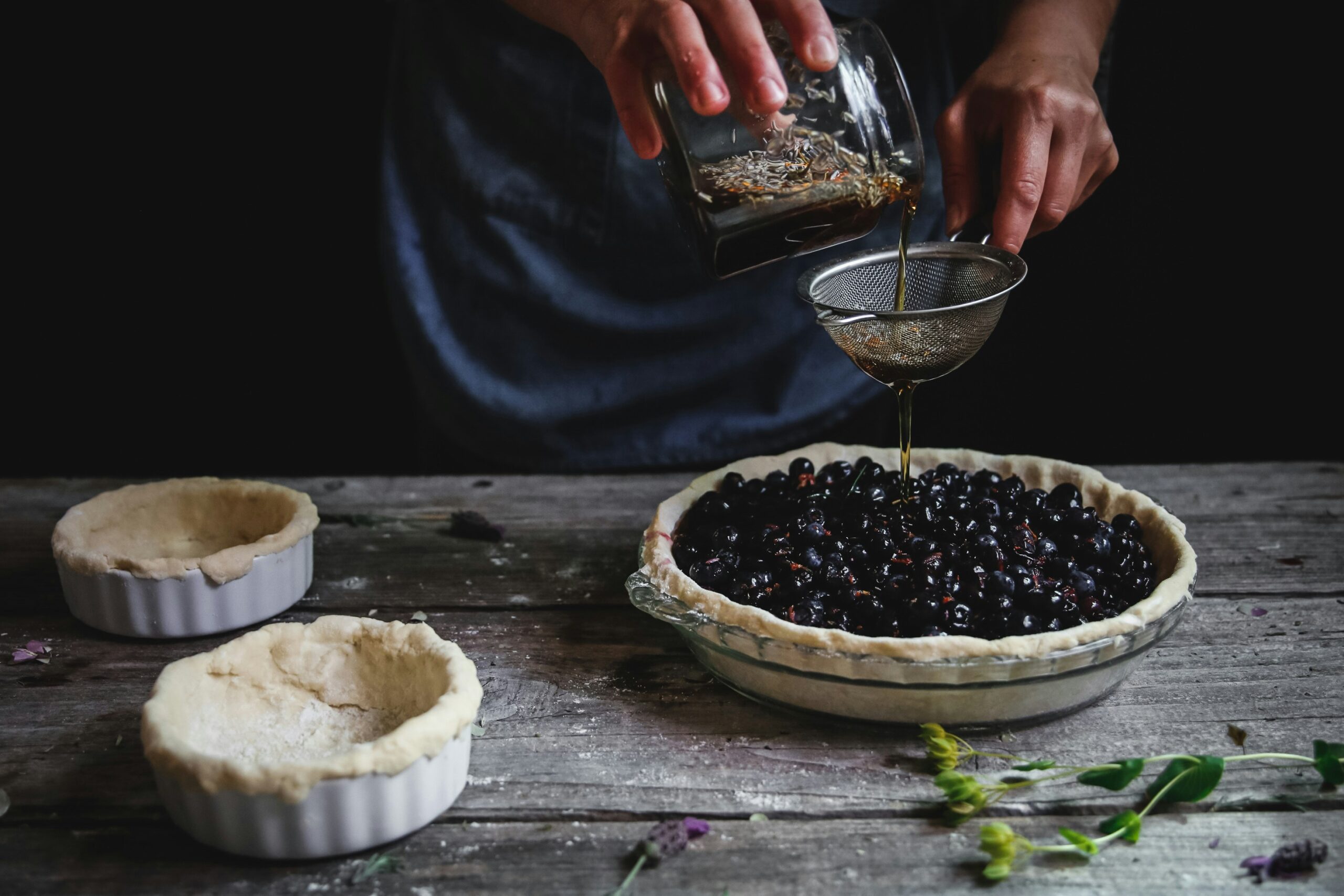
How to Make Blueberry Pie Filling Without Ending Up With a Runny Pie
This is one of the pie recipes where the pie comes out of the oven appearing perfect but then when you cut the first slice you end up with the contents spreading out over the plate and not keeping its shape, even though the crust could be nicely browned.Learning how to make blueberry pie filling is largely about controlling one thing: the considerable amount of liquid released by blueberries as they cook.
“The good news is that the process is straightforward, especially when you understand how to work with blueberries and manage the moisture they release during cooking.”
The sugar is needed to balance the tartness. The lemon adds a nice touch. A thickening agent such as cornstarch is needed to make the juices of the blueberries thicken nicely and be able to hold the shape of a spoonful. University extension and cookbooks have similar variations of this.
The details are important. Fresh versus frozen can make a difference, as can the amount of thickener used, and a filling that looks good in the pan may turn out too runny when it’s been chilled to serve. A few pointers and facts on how these things work together.
What Makes a Good Blueberry Pie Filling?
A good filling must be more than simply blueberries. It should have enough substance to hold its shape within the crust but remain tender enough to suggest fruits rather than something more firm such as jam.
Four ingredients are central to most recipes:
blueberries provide the sweet fruit flavor, tartness, liquid, color, and texture,
sugar adds sweetness, helps pull out some of the liquid from the fruit,
an acid such as lemon juice provides tartness that balances the sweetness and allows fruit flavor to shine through,
and
a thickener such as cornstarch is needed to make the juices of the fruit less liquid and more like a syrup when heated.
The ratio of these ingredients is more important than a variety of different flavorings. A simple recipe from University of Illinois Extension includes blueberries, sweetener, cornstarch, vanilla, and lemon juice while a similar recipe from Ohio State University extension uses blueberries, sugar, cornstarch, lemon juice, and butter. This comparison shows that there is no one correct answer as to what should go into a good fruit filling but the basic principles are still the same.
A Reliable Blueberry Pie Filling Recipe
For one standard pie, a practical starting point is:
- 4 to 5 cups blueberries, fresh or frozen
- ¾ cup granulated sugar, adjusted according to berry sweetness
- 3 tablespoons cornstarch
- 1 tablespoon lemon juice
- ¼ cup water
- A small pinch of salt
- 1 tablespoon butter, optional
This is more a versatile formula than a recipe, as published recipes can vary greatly in terms of sugar and cornstarch due to differences in berries, pie type, or preference in consistency. For instance, Ohio State University uses 4 cups of blueberries and ¾ cups of sugar with 3 tablespoons of cornstarch for their version.
Step 1: Prepare the blueberries
If you are using fresh blueberries, you will want to give them a once-over to ensure there are no stems or rot spots, then rinse and drain.
However, frozen blueberries work just as well (if not better) than fresh ones. There are some differences, though, like the fact that frozen ones tend to hold more liquid. Some methods call for partially thawing them before cooking, while more professional methods suggest thawing and draining the berries before using the liquid in the filling.
You don’t need to use fresh berries for your pie, but you do need to factor in the extra liquid they can produce.
Step 2: Combine the thickener with the dry ingredients
Mix the cornstarch in with the sugar and salt before adding it to the berries.
This will ensure that there are fewer of those big clumps of starch in the final product.
Another method is to make a slurry of the cornstarch and some cold water.
This method is good if you are going to cook the filling on the stove, as the Illinois Extension does with their blueberry filling.
Step 3: Cook part of the berries
One of the simplest ways to thicken your blueberry pie filling is to pre-cook some of the berries.
King Arthur Baking Company’s solution to blueberry pie’s “runny filling” problem? They begin by simmering half the berries with a cup of water, then add the sugar and cornstarch mixture.
They continue to cook until the mixture is quite thick, then adds in the remaining berries.
This creates a blueberry sauce consistency filling, but still leaves some of the uncooked berries to add texture and freshness to the overall flavor.
You could also cook all the berries.
It’s up to you how thick you want your filling to be.
Why Cornstarch Is So Important
Cornstarch is not just a “thickener,” it modifies liquids.
Fruits like blueberries have a high water content and when the heat is applied this water evaporates leaving a juicy liquid behind in the filling.
If you want to prevent this from happening and have an undesirable juicy filling your cornstarch needs to absorb this liquid.
As the starch is heated to the required temperature a binding agent is produced that will make the consistency of the filling firm enough to hold its shape even when it has cooled.
This is why you don’t want to add more cornstarch than needed. You will end up with a pasty, whitish, non-juicy filling.
Other professional bakers utilize starch in their filling and they boil the liquid until it reaches the desired thickness.
Step 4: Heat Until the Filling Actually Thickens
Once incorporated, your blueberries, sugar, liquid, and thickener go onto the stove. Medium-high heat causes the mixture to begin to bubble.
Watch it closely as it heats-thickens from a thin, juicy consistency to something much heavier.
Don’t stop when it reaches a rolling boil. You want to make sure that the starch used to thicken the mixture has had enough time to do its job.
King Arthur Baking’s tip says that their filling “becomes extremely thick when it reaches a rolling boil,” and they suggest making sure that you can see the bottom of the pan when you move a spatula across the mixture’s surface.
That’s a good way to know when it’s ready compared to an arbitrary time limit.
Step 5: Add lemon and other flavorings
Lemon juice is especially good for cutting through the overwhelming sweetness of blueberry-type fillings (you can use other types of acid, too, if you want).
You can add lemon zest, vanilla extract, cinnamon, or a pinch of nutmeg if you want extra flavor in your filling.
These should be used in moderation, though, lest they overwhelm the blueberries’ natural flavor.
Butter can also be added to enrich the filling-and while it makes the filling more flavorful, it’s not strictly necessary for making a pie.
Several tried-and-true recipes for blueberry pies call for lemon juice to be added to the mix, while others use lemon zest or spices.
Fresh vs. Frozen Blueberries: Does It Matter?
A typical miter gauge fence is relatively short.
Fresh blueberries are usually easier to determine the quality on because you can see and feel their state before cooking. The frozen berries, on the other hand, are more convenient to use, and they also make a good filling, although they tend to contain more moisture.
The main difference lies in the liquid, which does not necessarily mean that the berries should be used only when in season.
If one uses frozen fruit, one should not rely solely on a recipe’s estimations when preparing a dessert. It is better to watch the making of the filling and determine the necessary amount of liquid based on its actual state.
Professional bakers usually address the issue by following a recipe, which assumes that frozen blueberries will be thawed and drained, and the obtained juice will be used as part of the liquid in the filling.
Should You Cook All the Blueberries?
Not necessarily.
There are two useful approaches.
Fully cooked filling
All the blueberries are cooked with the sugar and thickener.
This produces a cohesive, sauce-like filling with fewer distinct whole berries.
It’s convenient when you’re looking for a traditional, uniformly thick filling or want to prepare the filling separately before assembling a pie.
Partially cooked filling
Only some of the berries are cooked and thickened. The cooked mixture is then combined with additional whole blueberries.
This gives you two textures at once: a thick blueberry sauce and berries that retain more of their original shape.
King Arthur Baking specifically recommends this style for a blueberry pie with a filling that combines thickened cooked berries and fresher berries.
Neither approach is inherently superior. The decision is really about texture.
Why a Blueberry Pie Filling Becomes Runny
A watery filling usually has a reason.
One possibility is insufficient thickener. Another is that the starch was never heated enough to fully thicken the liquid.
The berries themselves can also be responsible. Very juicy fruit releases more liquid than a drier batch.
Another common issue is judging the filling immediately after cooking. A filling can continue to firm as it cools. Recipes from extension and baking sources commonly instruct cooks to cool the filling before serving or assembling certain versions.
Finally, slicing too soon can make a perfectly good pie appear under-set. The filling needs time for its structure to stabilize.
The Difference Between Pie Filling and Blueberry Sauce
These two products might have nearly identical ingredients, but the end texture is supposed to be different.
Blueberry sauce needs to be free flowing to pour over pancakes, waffles, cheesecake, or ice cream.
The pie filling requires more thickness to hold its shape in the pastry.
That’s why a good blueberry sauce might not necessarily make a good pie filling.
If you’re making the filling for a pie, you need to get it to a more substantial consistency before adding it to the crust.
How to Make Blueberry Pie Filling With Less Sugar
Sugar levels can be adjusted, especially if the berries are naturally sweet
One should also bare in mind that sugar is not merely a sweetening agent, but also plays a role in the overall fruitiness of the mix
Rather than reducing it to a minimum in the tested recipe, it is advisable to make small adjustments and taste the berries before cooking. For example, if tart berries are used, they may require a higher percentage of sweeteners as compared to naturally sweet fruit.
The amount of lemon juice should also be adjusted with care, as an excess of it may overshadow the subtle flavor of blueberries.
Finally, note that the most favorable filling is not necessarily the sweetest one, but rather the one that most resembles blueberries in flavor.
Can You Use Flour Instead of Cornstarch?
Yes, flour can be used as a pie filling thickener, although it doesn’t behave exactly like cornstarch.
Some traditional blueberry pie recipes use flour instead. The University of Guelph, for example, gives a blueberry pie method using cornstarch for frozen berries and suggests flour as an alternative when using fresh berries.
Cornstarch generally gives a cleaner, more concentrated thickening effect, while flour can produce a somewhat different texture and appearance.
If you’re adapting a recipe, don’t substitute equal volumes automatically. Flour and cornstarch don’t have identical thickening strength.
A Useful Trick for Better Texture
If you’re creating a double-crust or lattice pie, you might choose to cook down the filling until it’s visibly thick before filling. Why do this? It’s true that the filling will get extra heat in the oven, but you shouldn’t rely on the pie crust to be part of the thickener solution: the filling should have the right mix of fruit, juice, and thickening agent at that stage in the recipe already.
Another idea: Some pies put fresh blueberries in the crust and pour a cooked blueberry mixture over the fresh berries, which the Ohio State University website details: half the berries are cooked down with sugar and other filling ingredients and piled on top of fresh blueberries that are already resting in the crust.
How Long Should Blueberry Pie Cool?
“Cooling is part of the recipe, not an afterthought, because proper pie cooling gives the thickened fruit juices time to stabilize before slicing.”
A pie may look loose when it first comes out of the oven because the filling is extremely hot. As it cools, the thickened juices become more stable.
Recipes vary in their recommended cooling periods. One published blueberry pie recipe advises cooling for several hours, while another stovetop filling method calls for complete cooling before the filling is used.
If you cut into the pie immediately, expect a softer filling and more movement.
For clean slices, patience is usually more effective than adding extra starch.
Can You Make Blueberry Pie Filling Ahead?
“A cooked blueberry filling can be prepared in advance, cooled, covered, and refrigerated before use, making it easier to plan ahead when preparing homemade pie recipes.”
This can make pie preparation easier because the filling doesn’t have to be made at the same moment as the crust.
If You’re Making It to Store You can just adapt the pie filling to bake pie later on. But you know we’ve talked about home preservation before–it’s no different than just refrigerating food. Take for example canned blueberry pie filling with Clear Jel compared to just adding more cornstarch in with your existing stovetop recipe. That really matters because what makes it safe for pie now, doesn’t make it safe for the shelf now, as you can tell with some older pie filling recipes that were stored long term on the shelf, for instance using flour, and not as successfully, than using an actual canning thickener like clear gel and water.
Common Mistakes That Change the Result
The biggest mistakes are usually small.
Using too much liquid can leave the filling loose.
Adding dry cornstarch directly to a liquid mixture can create lumps if it isn’t distributed properly.
Stopping the cooking process too early can leave the starch underdeveloped.
Adding excessive starch can create an unpleasantly thick texture.
Skipping acidity can make the filling taste flat and overly sweet.
Using a hot filling without considering the crust can complicate assembly and texture.
Cutting the finished pie immediately makes it harder to judge the final consistency.
None of these problems requires an elaborate solution. They are mostly matters of controlling moisture, heat, and timing.
A Practical Way to Adjust the Recipe
Think of the recipe as a system rather than a fixed list of numbers.
If the berries are very juicy, concentrate some of their liquid before assembling the pie.
If the berries are particularly tart, adjust the sugar gradually.
If the filling isn’t thickening, check whether it has actually reached the necessary temperature rather than immediately adding more starch.
If the cooked filling is already very thick, don’t keep reducing it simply because a timer hasn’t finished.
This approach is more reliable than blindly following a number of minutes because blueberries vary from batch to batch.
Can You Make Filling From Canned Blueberries?
Yes, but canned blueberries introduce another variable: the liquid they are packed in.
Drain them appropriately and avoid automatically adding the full amount of liquid specified for fresh berries.
Canned fruit may also be sweeter depending on the product, so taste and adjust rather than assuming the same sugar quantity will work.
The goal remains the same: achieve enough concentrated fruit flavor and structure to support the crust.
The Bigger Lesson Behind a Good Blueberry Filling
The best way to understand how to make blueberry pie filling is to stop thinking of it as simply “blueberries plus sugar.”
It is a balanced blend of fruit, liquid, sugar, acid, and starch. As berries warm, they give up their juices, and the starch thickens the juices. You can then adjust the sugar and the acid to create an interesting balance and texture and then use cooled berries or fresh ones to complement it.
Once you understand that dynamic (or, if you know the roles that each element plays), recipe development becomes relatively intuitive. You have the option of using fresh or frozen, filling it entirely cooked or partially raw, and using either cornstarch or a similar thickener-as long as you understand how much liquid to anticipate from your berries and that you have enough substance in your finished mixture.
Conclusion
Learning how to make blueberry pie filling is less about finding a secret ingredient and more about managing the natural juice in the fruit.A reliable filling relies on good quality blueberries, sugar and lemon for flavor balance, and the right thickener to provide structure to the juices. Cornstarch is a common thickener, but measure accurately, both the amount relative to your pie filling and to the moisture content of your berries.
The result of this type of pie filling will likely be your most reliable if you cook it fully, don’t assess final thickness when the pie is piping hot, and make sure your pie is adequately cooled before cutting into. This is all especially true for both your cooked and your raw and cooked berry filling if you want to have much greater control then if your recipe is solely on a timed basis.
FAQS
1. Can I use frozen blueberries to make pie filling?
Yes. Frozen blueberries work well, but they can release considerable liquid as they thaw and cook. Adjusting the cooking process for that moisture is more important than whether the berries are fresh or frozen.
2. How much cornstarch should I use for blueberry pie filling?
There isn’t one universal amount because recipes vary according to berry quantity and moisture. Published recipes commonly use several tablespoons of cornstarch for around 4–5 cups of blueberries.
3. Why is my blueberry pie filling runny?
Common causes include excess berry juice, insufficient thickener, inadequate cooking, or cutting the pie before it has cooled enough to set.
4. Can I make blueberry pie filling without cornstarch?
Yes. Flour and other suitable thickeners can be used. Flour is a traditional alternative, although it produces a somewhat different texture from cornstarch.
5. Should blueberry pie filling be hot or cold before adding it to a crust?
It depends on the recipe. Some methods use freshly cooked filling, while others specifically call for cooling the filling first. Following the chosen method matters because temperature can affect the crust and final texture.
6. How do I make blueberry filling less sweet?
Start with less sugar when the blueberries are naturally sweet, then taste and adjust. Lemon juice can also provide acidity that makes the fruit taste brighter without adding sweetness.
7. Can homemade blueberry pie filling be canned?
It can be preserved, but ordinary pie-filling recipes should not simply be converted into canning recipes. Tested preservation formulas use specific ingredients and proportions, such as Clear Jel and bottled lemon juice.