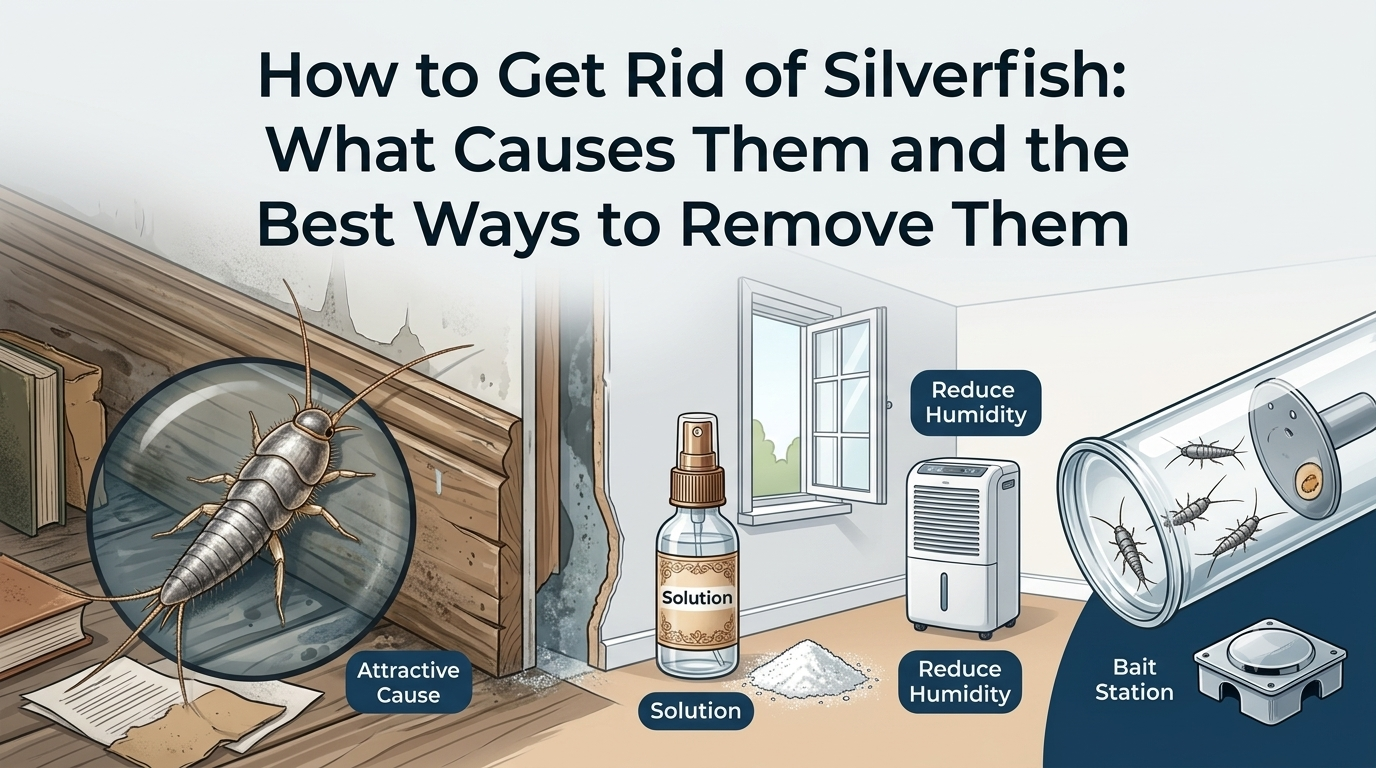
Did you see a flash of silver on your bathroom floor or a rapid disappearence behind a stack of books and all of a sudden have the creepy crawly feeling something has taken up residence in your home? Fortunately silverfish are nothing to fear in terms of personal safety for you and your loved ones but can unfortunately make quite a nuisance of themselves over time by chewing through books, wallpaper, clothes, cardboard and other materials in your home. The stealth of the silverfish does make it harder for you to accurately determine how many you have living with you!
If you’ve been searching for how to get rid of silverfish, the first step is understanding what attracts them. Unlike insects that invade homes looking for people or food scraps, silverfish are Attracted to damp, dark environments, especially with starch or cellulosic content. Once a favorable habitat has been established, roaches will live for months without being seen until conditions have drastically altered. Luckily, the majority of all infestations are simply eradicated by proper maintenance and moisture reduction along with the use of specifically placed insecticides. Unlike a quick ‘kill,’ sustainable maintenance practices remain a safer and long lasting remedy.
What Are Silverfish?
A Silverfish is a tiny, wingless insect whose body is covered with tiny, shiny silver-gray scales which give it the appearance of moving with fish-like skittering motions. Adults can get to be around half-an-inch long and their bodies possess long antennae along with long, bristle-like appendages which trail behind them. Because silverfish are a creature of the night, many homeowners won’t even know they are present until numbers reach outbreak levels.
At night, the pest travels by roaming through cracks, underneath the kitchen sink and beyond the baseboards, and the interiors of wall voids or simply under stacked boxes of items in the basement, attic and garage, hiding when light is on.
The pest feasts on whatever contains starches, carbs and sugars, such as glues used forbook bindings and wallpapers, photos, wallpaper, cereals, fabrics and flour. It will feast upon almost anything.
Why Are Silverfish Living in Your Home?
Now that you know why silverfish get into your home, you know the most effective strategies to get rid of them forever. The Number One Lure – Moisture Silverfish thrive on humidity and damp environments. They have the ability to draw moisture out of anything they touch.
Bathrooms, kitchens, laundry rooms, basements and poorly vented areas such as closets, andcrawl spaces all have the humidity and moisture silverfish needs to live.
Ample Hideaway Spots Piles of cardboard boxes, stored newspapers and magazines, closets filled with clothes or boxes – anything that serves as an easy hiding place – can also attract silverfish, and they just happen to make tasty meals too.
Several common household conditions can encourage silverfish, including:
- Leaking pipes or plumbing fixtures
- High indoor humidity
- Poor air circulation
- Stored paper products
- Damp basements
- Overflowing storage areas
- Cracks around windows, doors, or foundations
Simply removing the insects without addressing these conditions often leads to recurring infestations.
How to Get Rid of Silverfish Effectively
Successfully learning how to get rid of silverfish involves making your home less attractive to them rather than only killing the insects you can see.
Lower Indoor Humidity
Since silverfish are dependent on moisture, decreasing humidity levels significantly impacts their survival. Using a dehumidifier to reduce indoor humidity can make your home far less attractive to these pests.
This can be achieved by turning on bathroom fans after taking a shower and ensuring ventilation in other damp areas.
Fixing plumbing issues and using a dehumidifier may also help, and ideally, humidity levels should be less than fifty percent in problem areas.
Remove Food Sources
Silverfish have a wide diet, so it is essential to store dry food such as flour, oats, rice, cereal, and pet food in sealed containers.
Moreover, organizing bookshelf storage, paper products, and other items such as cardboard boxes when possible reduces the risk of infestation.
Vacuuming regularly gets rid of any food particles, dust, and other organic matter that may attract silverfish.
Deep Cleaning Activities
Since silverfish spend most of their time hidden, it is necessary to clean areas that are not easily visible.
Vacuuming under furniture, baseboards, in closets, along the back of cabinets or sinks, and anywhere else that can retain dust and moisture helps tremendously.
Getting rid of clutter, cobwebs, and dust makes it challenging for silverfish to thrive in the area.
Sealing Off Crevices and Cracks
Cracks and crevices around windows, doors, sinks, and where plumbing fixtures meet walls can allow invading insects to gain access to the house.
Although sealing these gaps may not prevent an existing infestation, it will keep other pests out while reducing the chances of silverfish returning.
Natural Remedies That May Help
If you want to get rid of silverfish without using chemical pesticides, there are some ways to do that. They can be combined with regular cleaning of the house.
Food-Grade Diatomaceous Earth
Food-grade diatomaceous earth is a good pesticide for getting rid of crawling insects. You can use it in cracks, behind the furniture, and in other places where silverfish hide. Make sure that the dust is not moist, and follow the instructions on the packaging. Remember that you should keep the product away from the reach of children and animals.
Cedar
Silverfish hate the smell of cedar, so you can use cedar blocks, cedar chips, and cedar oil to get rid of silverfish. Place them in your closet, wardrobe, drawers, and other places where you see silverfish. You will not be able to get rid of the infestation with cedar, but you will prevent it.
Sticky Traps
You can buy sticky traps for a cheap price. Set them up in places where you have noticed silverfish before. You can set traps near bookcase furniture, under the sink, behind the furniture, and in other places suitable for silverfish.
Should You Use Insecticides?
3.chemical insectcidesFor more serious infestations and if you are seeing silverfish after cleaning and taking moisture controlsmeasures, one might want to consider chemicals. 4.crawl-Insecticides Products labeled for crawling insects can be applied to cracks, crevices and other hiding spots according to labelsinstructions. Do not spray food-preparation and food-storage areasunlessthe product explicitly states its acceptable use for those areas. 5.ask A ProIf you’re in doubt, and would rather not put your mind at rest by calling in professionals, that a qualified pest inspector be the one to decide on which of the following methods may be adequate and best.
How to Prevent Silverfish from Returning
Long-term prevention is more effective than repeatedly treating new infestations. A few consistent habits can make your home much less inviting to silverfish.
- Fix plumbing leaks as soon as possible.
- Keep indoor humidity below 50% whenever possible.
- Store books, important papers, and seasonal clothing in dry containers.
- Vacuum regularly, especially in hidden corners.
- Remove old newspapers, cardboard boxes, and unnecessary clutter.
- Seal cracks around doors, windows, and utility pipes.
- Store pantry foods in airtight containers to reduce access to food sources and follow safe food storage practices to help prevent future silverfish infestations.
These simple maintenance practices not only discourage silverfish but can also help prevent other household pests.
Common Mistakes to Avoid
Many homeowners focus only on killing the insects they see. Unfortunately, that rarely solves the problem.
Common mistakes include ignoring moisture problems, poor sanitation, and delayed pest control. If you’re dealing with other household pests, our guide on how to get rid of stink bugs offers additional prevention and removal strategies.
- Ignoring moisture problems.
- Leaving clutter in damp areas.
- Relying solely on insect sprays.
- Storing paper products in humid basements.
- Failing to inspect hidden spaces where silverfish breed.
Addressing the underlying conditions is essential for lasting results.
Conclusion
Learning how to get rid of silverfish is about more than eliminating a few insects—it requires removing the conditions that allow them to thrive. By decreasing humidity, removing clutter, sealing off entry points, and making sure food is stored correctly, most homeowners can get rid of them. If you’re still having issues with silverfish, then a professional pest control operator can help you find sources of infestation and recommend what steps to take for eliminating them. With regular prevention and maintenance, you can ensure that silverfish never return.
Frequently Asked Questions
1. What attracts silverfish to a house?
Silverfish are often found in moist, dark places with high humidity. Other things that attract them include paper products like books and newspapers, cardboard boxes, items made of or containing starch or sugar, and stored food.
2. Are silverfish dangerous?
Silverfish are generally harmless to humans. They do not carry any diseases, and they do not bite or sting. However, they can cause damage to various objects in the home, including books, clothes, paper products, and more.
3. Do silverfish ever leave on their own?
Unfortunately, they rarely do. The only way they will leave is if an area no longer has the conditions they need to survive.
4. How can I get rid of silverfish quickly and efficiently?
The best way to get rid of them quickly is to reduce humidity, clean up any food sources, seal off any possible entry points, and then set glue traps or use insecticides.
5. When should I call a professional pest control company?
If silverfish keep coming back after weeks of prevention and treatment, or if you’re seeing them in many parts of your house, you should contact a professional pest control company.