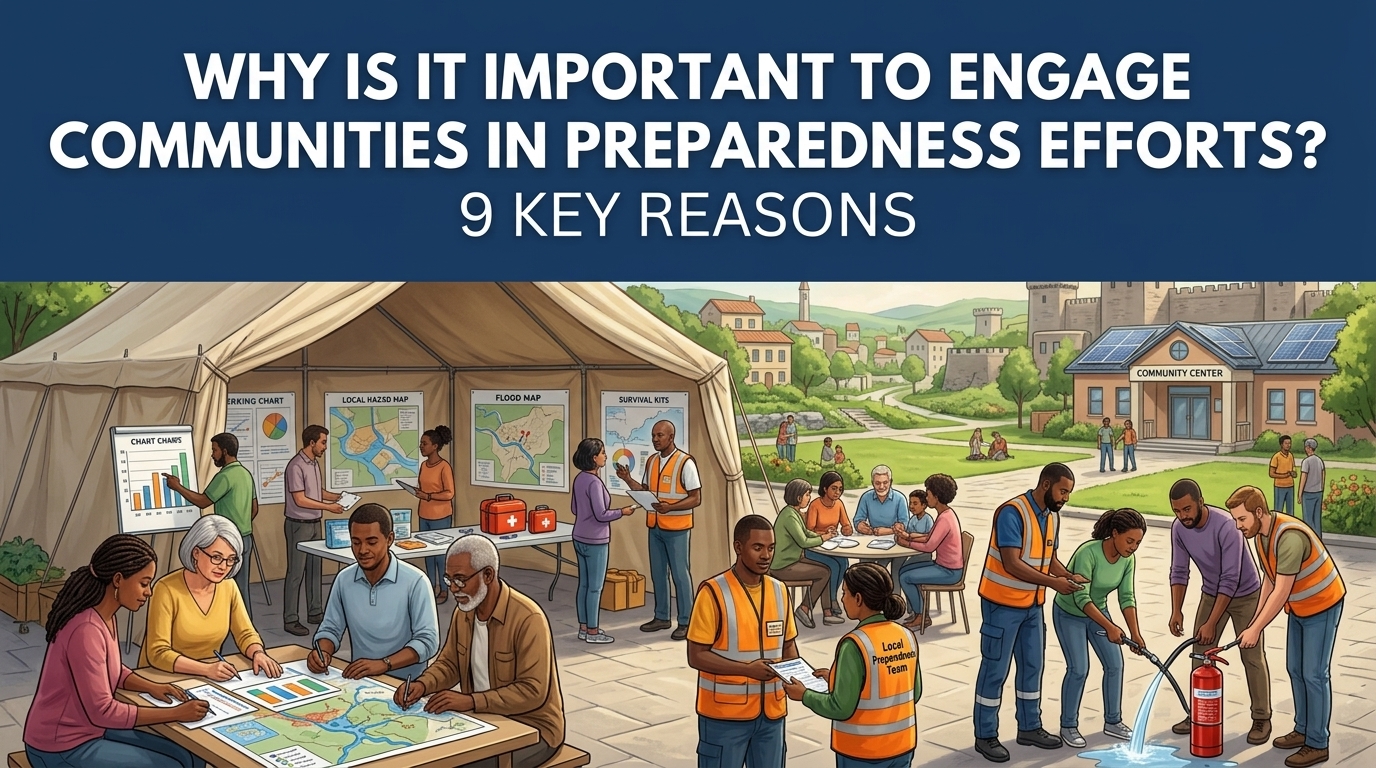
Talk of emergency preparedness usually involves emergency services, plans put together by various government agencies, routes to escape, early warning systems and supplies.Yet one of the most important questions is often overlooked: why is it important to engage communities in preparedness efforts? The answer goes beyond simply asking residents to follow instructions during a disaster. Communities possess local knowledge, relationships, skills, resources, and firsthand understanding of vulnerabilities that can significantly influence how well a population prepares for, responds to, and recovers from emergencies.
Understanding why is it important to engage communities in preparedness efforts starts with recognizing that modern disaster risk reduction increasingly treats preparedness as a shared responsibility. Community Engagement is essential to implementing the “Whole Community” approach to building resilient communities, adopted by the US federal system of response, as well as “All Hazards” approaches such as that of the UN’s “Sendai Framework for Disaster Risk Reduction,” which requires an ‘all-of society’ to ‘Whole of Society’ approach.
Community engagement “builds trusting, shared responsibility. “Community engagement is neither a public-relations event nor simply a formality. It contributes to more effective risk assessment, emergency planning, and service provision and ultimately helps reduce risk. It also allows communities to develop shared visions for preparedness.”
What Does Community Engagement Mean in Emergency Preparedness?
Community engagement is defined as the process by which people, and organizations, are included in decisions, planning, training, communication, and activities to prepare for hazard.
This is not the same as public information.
When considering why is it important to engage communities in preparedness efforts, a one-way approach might involve an emergency management agency publishing an evacuation map and telling residents what to do. Involvement goes deeper.
Community members can weigh in onWhich roads flood firstWhich neighborhoods lack transportationoptionsWhich neighbors might need extra helpAre there an aging and disabled who might need assistanceWhat are the appropriatelanguages to reach residentsWhich community based organizationspartners could help make messages heardWhy it matters preparedness is for real communitiesThe real purpose of preparedness is for actual human communities, rather than for generalized population.
FEMA characterizes preparedness as a whole-community approach and refers to families, communities, businesses, schools and governments as all having to work together for to build a disaster-ready nation.
Following a similar logic, United Nations in the Sendi framework emphasizes that governments have primaryresponsibilityfor disaster risk and loss while also assigning considerable responsibility tolocal governments and to business private actors to work together with communities.
1. Communities Understand Local Risks That Outside Planners May Miss
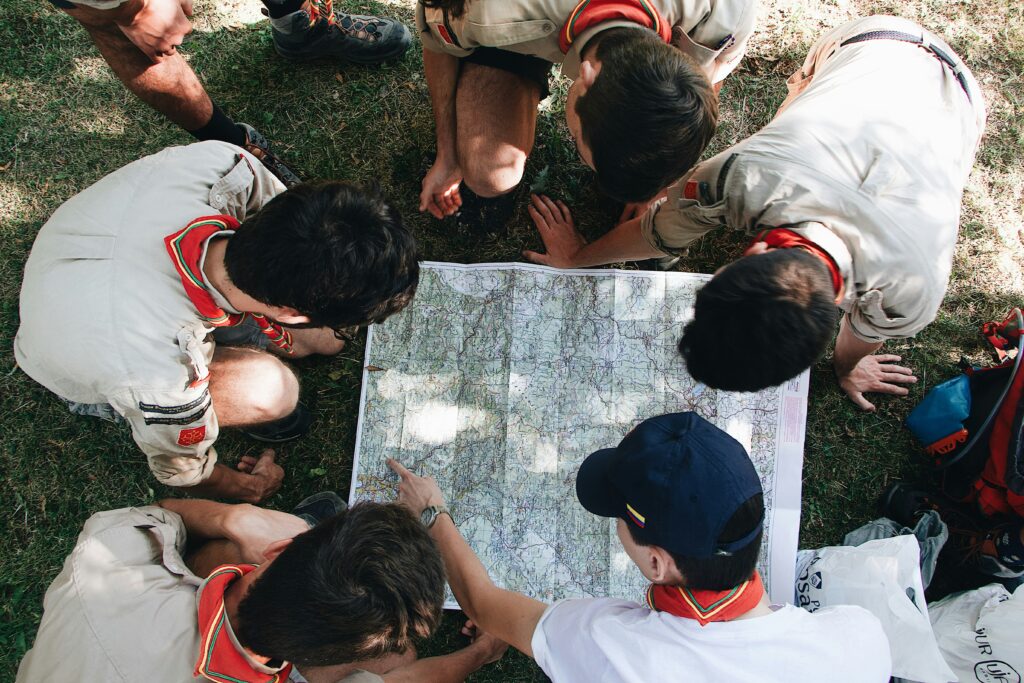
One of the most compelling arguments for engaging the community is localized knowledge. An emergency planner might not understand the specifics of a neighborhood in the way the residents themselves do, no matter how much information you put on your spreadsheets or data graphs. The emergency planner can consult maps of hazard zones, census figures, inventory of buildings, infrastructure details, and technical studies, but this is usually not enough to paint a clear picture of ground reality.
Understanding why is it important to engage communities in preparedness efforts means recognizing that residents often possess practical local knowledge that outside agencies may not have.Community members know that a specific road is impassable after a major storm, a bridge is often congested, or communication service isspotty in their neighborhood. Local knowledge such as this could better inform emergency planners’ assessment of vulnerabilities, leading to more effective plans to prepare for and respond to emergencies.
This could result in better risk assessments and emergency plans. FEMA’s National Preparedness System defines “Understanding and Assessing Risk” as a “cornerstone element of preparedness.” When communities understand the risks that they face, they are better equipped to identify necessary capabilities. Engagements bring this reality to risk assessments because local participants have knowledge of conditions that are not necessarily reflected in available data. This knowledge is especially helpful when risks vary greatly within a single city or region. An overview flood map, by itself, can’t show how particular neighborhoods can be subject to variable flooding patterns, transportation access issues, communication outages, or power failures.
2. Community Participation Reveals Vulnerabilities More Accurately
No community, ever, is impacted by a disaster in the exact same way.
Households, which may possess private transportation, broadband internet, accessible savings and flexible employment, or who might lack mobility, encounter language barriers, possess inadequate savings, and have caregiving obligations are among those whose impacts differ and vary widely.Recognizing these differences helps explain why is it important to engage communities in preparedness efforts, because effective emergency planning must reflect the real circumstances and needs of the people who will rely on it.
Ignoring these differences in preparedness planning, a seemingly logical emergency plan could prove insufficient at a critical moment for certain segments of the community. Engaging with all parts of a community can allow planners to acknowledge these distinctions in advance of an emergency.
The existing UNDRR strategic framework recognizes the imperative of including people from communities likely to be more affected or at risk – including older people, children and youth, persons with disabilities, displaced persons, indigenous people, and discriminated populations – through inclusive disaster risk reduction. Ultimately, the on-the-ground takeaway is that planning should not target the “typical person” as they likely don’t exist.
3. Engagement Builds Trust Before a Crisis
It is during urgent decisions thattrust can be critical.
In emergencies, officials might order evacuations, shelter in place, conserve supplies, avoid certain areas, or adhere to public health recommendations. People will be more likely to comprehend and comply with these directions if an established information network and relationship has already formed.
Community engagement allows for these relationships to form in advance.
This does not mean officials will always gain full compliance with every decision, but participation builds the relationship between residents, emergency managers, local governments, nonprofits, and other entities involved.
Building this relationship works both ways. Officials can obtain feedback to learn if warnings are comprehended and communicated in a way that residents find useful, culturally appropriate, and effective in reaching the proper individuals.
UNDRR suggests coordination, information sharing, and citizen participation are key aspects of stakeholder engagement for DRR.
4. Prepared Communities Can Contribute During the Early Stages of an Emergency
Emergency services are critical, but cannot all be present. An event that affects a wide geographic area, in addition to shutting off or significantly impeding transport, communications, power, health, and the like, should not assume an emergency response that includes every emergency responder across the nation at every impacted location. FEMA’s preparedness framework, therefore, necessarily must encompass the whole community, not just emergency responders alone, as actors committed to the outcome of preparedness.
The community members themselves may know when to check the official alerts, whom to access for dependable data, how to reach relatives, what types of supplies they need, or what kind of action is expected during specific events in their locales.
Community organizations also bring potential capacity: businesses can offer equipment and facilities, schools can share communications networks, faith-based groups may already have trust relationships with residents, nonprofits may be attuned to the specific needs of various populations, etc. The advantage gained by utilizing community members does not replace professional responders with amateur responders, but instead adds a great number of human beings, organizations, and resource groups to the network of capable individuals and entities who can take effective, appropriate action while professional responders get underway.
5. Engagement Improves Emergency Plans Through Realistic Testing
A written plan is only a starting point.
Preparedness becomes more meaningful when plans are discussed, exercised, tested, evaluated, and revised. FEMA describes preparedness as a continuous process involving planning, organizing, equipping, training, exercising, evaluating, and implementing improvements.
Community members can expose weaknesses that planners might not notice during an internal review.
For example, an evacuation exercise could reveal that:
- an evacuation route becomes congested quickly;
- warning messages are unclear;
- some residents cannot access transportation;
- a shelter location is difficult to reach;
- communication channels do not reach everyone;
- responsibilities between organizations are unclear.
These aren’t failures of community involvement: in fact, they are exactly the sorts of things you want engagement to identify at a point where you have an opportunity to fix them. FEMA’s planning guidance also stressed use of whole-community planning to identify capacities, capabilities, and responsibilities and a practical path to possible crises.
6. It Makes Preparedness More Inclusive
Even a well-designed emergency response plan may fall short if the people that is suppose to save can’t obtain it For example it makes it easy for preparedness and planning efforts to take different language barriers, disabilities, ages, access to transit, use of digital technologies, and varying social, and economic status. Inadequate technology, such as a smart device-only emergency alert system can fail to properly serve communities not all individuals may or have regular access to. Similarly, individuals who are not self-transmitting on foot due to a physical limitation may fail to secure space within emergency plan that requires those affected persons to self-travel to facilities such as a local shelter.
An emergency management system doesn’t plan a totally individualized system for various communities and demographic groups.
The initiative plans to remove impediments to ensure services can go to everyone. WHO’s global framework on the civil society’s engagement in health emergencies to promote community empowerment and shared responsibility for health emergencies that are developed, prevented, responds to and to recover from resilience is what the world be looking forward in 2025, WHO has gone again in 2026 continuing the vision that the communities are to be involved not as the receivers but of protection and not just from any ill-fated phenomenon but even protection to life and living.
7. Community Networks Strengthen Social Resilience
Preparedness is not only about community resilience.
Social connections matter too.
Community members also draw upon resources such as families and neighbours, community organisations, workplaces, schools and local institutions to get information and support. Strengthening those networks means it is possible to know who needs help and combine our skills when things go wrong. When this helps people and communities overcome challenges, it is known as community or social resilience.
Preparing the network in advance Community preparedness activities are one way to build those connections and networks before an event or disruption occurs.
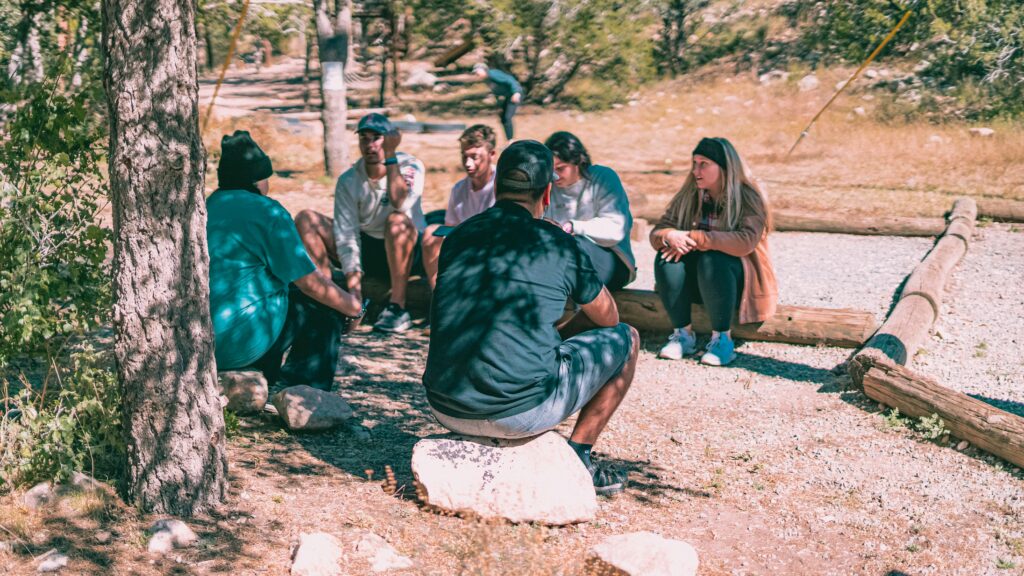
A neighborhood prepares for a public health event, for instance, may link neighbours to a school principal, doctors, a community emergency organisation or workplace even if the engagement is only an afternoon with a lot of coffee and snacks. The networks formed can continue to be useful at work with school closures or when it’s necessary to support neighbours at home who are ill. For UNDRR, building and strengthening partnerships among all stakeholders – across governments, civil society, the private sector, science and academia, young people and local governments – are critical to the long-term effort of making societies safer from disasters.
8. Local Participation Can Improve Resource Allocation
Preparedness resources are never unlimited.
Decision makers must choose where to invest resources on training, emergency equipment, communication infrastructure, shelters, transportation, mitigation projects, and more. Citizen inputs may identify the top priorities. A neighborhood may voice that they often can’t access them through certain transportation corridors, that that is not evident at a regional level.
Local business may note a supply chain weakness that will be disrupted, and disabled peoples’ organizations can help identify accessibility issues within an evacuation plan.
This can help decision-makers allocate resources on actual risks instead of idealized ones. The Sendai Framework cites interrelated priorities: disaster risk assessment, disaster risk governance, disaster risk reduction investment, and strengthening disaster preparedness.
9. Engagement Supports Faster Recovery After Disasters
Preparedness does not stop when an immediate emergency has passed. Local communities need to rebuild homes, workplaces, schools, health services, infrastructure, livelihoods, and social connections too. Often those who live in areas that are affected are best positioned to decide what recovery should mean for them.
They are knowledgeable about what services are most vital, and what decisions are being made about recovery could pose future risks.
UNDRR’s 2026-2030 strategic framework focuses directly on locally-led DRR and resilience in an immediate-term disaster recovery framework. This points to a key principle: community-driven preparedness and recovery builds greater resilience than simply receiving decisions from outside the affected community.
How Should Communities Be Engaged in Preparedness Efforts?
A high level of community engagement will not have influence if it is tokenistic participation. A meeting held after all the decisions have been made is participation (although limited); however, bringing residents in earlier is preferable.
Start With Local Risk Assessment
Ask residents what hazards they experience, which services are vulnerable, and what barriers they face during emergencies.
This can complement technical hazard assessments with practical local knowledge.
Include Organizations That Already Have Community Trust
Schools, nonprofit organizations, businesses, faith-based groups, neighborhood associations, healthcare organizations, disability organizations, and other local institutions may already have established communication networks.
Using these networks can make outreach more effective than relying exclusively on government channels.
Make Participation Accessible
Meetings, training sessions, emergency materials, and exercises should be designed so that people with different communication, mobility, language, and technology needs can participate.
Inclusion should be considered from the beginning rather than added after a plan is completed.
Give Participants a Real Role
Residents should be able to influence risk identification, planning priorities, exercises, communication methods, and evaluation.
This makes engagement more useful and gives participants a clearer understanding of how their contributions affect preparedness.
Test and Revise the Plan
Thinking should be treated as a process, not a project.
After an exercise or event, whether a drill or an emergency, an organization ought to question what made it work, what make it failure, what part the of event went wrongly understood and what should be changed for next time. In FEMA’s process improvement directives to “enhance preparedness program by determining actual overall effectiveness” and “maintain preparedness capabilities as threats and capabilities change”.
Common Mistakes in Community Preparedness
Community participation falters when organizations implement it as an activity or task. Here are four common areas in which organizations fall short: One-way communication. Distribution of information on emergencies may not actually translate into community members’ participation in preparedness.
Engaging the easy audiences.
If responders consistently receive input from established organizations while ignoring renters, individuals with disabilities, those of low income, youth, seniors, or individuals for whom a different language is primary, critical gaps in the preparedness plan can result. Requesting input and providing no response. If residents ask repeatedly about an issue and receive no follow through, faith may be lost in the process. Neglecting broader organizational issues or community level vulnerabilities.
Emergency kit programs sometimes overshadow the importance of developing communication networks, securing funding for and identifying emergency responders, the development of organizational infrastructure, improving evacuation plans, etc.
A solid preparedness plan requires adequate individual and community capacity.
Community Engagement Does Not Mean Everyone Has the Same Responsibility
However there are big differences between shared responsibility, and equal responsibility. Emergency responders have specific, critical jobs that non-emergency specialists will rarely be able to do themselves. Governments must address core responsibilities such as public service, crisis operations, essential infrastructure, alerts and notifications, and similar responsibilities.
But for other responsibilities, homes, businesses, NGOs, schools, community groups, and others can fill their specific roles with various capabilities they have on hand.
The FEMA “whole community” helps to clarify where we build or provide those diverse capabilities by uniting governments and non-governmental partners instead of seeking one organization to provide them all. Accordingly, engagement means, “connecting complementary strengths to manage risks.”
The Deeper Reason Community Engagement Matters
The strongest argument for community engagement is that disasters are social as well as physical events.
Whether the emergency is a flood, fire, quake, disease outbreak, big weather event or tech crash, it can wreck stuff. Whether that’s what it means depends on how folks will talk, figure out next steps, get the goods they need and work together, and bounce back. That means today’s disaster work puts more value on locally led action, inclusion, coalitions, knowledge of risk and resilience.
In fact, disaster reduction is the big thematic area of the 2026-2030 work of the UNDRR, along with “risk knowledge,” “financing,” and “recovery ready.”
Locally led disaster work ties into these areas. When locals share their risk knowledge and local groups offer capabilities, authority, resources to collaborate and develop practical disaster preparation plans.
Conclusion
So, why is it important to engage communities in preparedness efforts? Because communities are not simply the people who experience disasters; they are an essential part of preparedness itself. Knowledge comes from residents, access comes from organizations with infrastructure and networks, vulnerabilities are exposed by community input where technical analysis may lack insight.
Effective planning occurs when emergency communication is strengthened, when preparedness programs are improved, when inclusion occurs in all aspects of preparation, when drills and exercises expose gaps, and when relationships are forged to prepare for response and recovery efforts.
This notion informs the trend in modern disaster risk reduction: to truly be resilient requires cooperation among the public, private sector, community groups, civil society and others. Strong preparedness programs, therefore, don’t simply prepare communities to cope with emergencies; they “prepare with communities”, making certain residents have a significant role in identifying risks, conceptualizing solutions and testing plans before disaster strikes.
8. Frequently Asked Questions
1. What is community preparedness?
Community preparedness is the collective process of identifying local hazards, developing plans, building capabilities, educating residents, coordinating organizations, and practicing how to respond and recover from emergencies.
2. Why can’t government agencies handle disaster preparedness alone?
Large emergencies can exceed the capacity of individual agencies, particularly when transportation, communications, healthcare, utilities, and other services are simultaneously affected. Whole-community preparedness combines government capabilities with those of residents, businesses, nonprofits, schools, and other organizations.
3. How does community engagement improve disaster response?
It can help establish communication channels, clarify responsibilities, identify local resources, and reveal practical problems in emergency plans before a disaster occurs. It also helps residents understand what actions they may need to take.
4. Who should be included in community preparedness?
Participation should extend beyond emergency management agencies. Depending on the community, participants can include residents, local authorities, schools, businesses, healthcare organizations, nonprofits, faith-based groups, disability organizations, youth groups, older adults, media, and other relevant stakeholders.
5. What is the difference between community engagement and public awareness?
Public awareness generally focuses on providing information to people. Community engagement involves two-way interaction in which residents and organizations can contribute knowledge, influence decisions, participate in planning, and help evaluate preparedness activities.
6. How can a community tell whether its preparedness plan works?
Exercises, simulations, drills, community feedback, and reviews after real emergencies can reveal weaknesses. Plans should then be updated based on what was learned. FEMA describes continuous improvement as an ongoing part of preparedness.
7. Why is inclusion important in emergency preparedness?
Different groups can experience the same hazard differently. Including people with different ages, abilities, languages, transportation options, and socioeconomic circumstances helps planners identify barriers and create preparedness measures that work for a wider portion of the population. UNDRR specifically emphasizes inclusive and equitable resilience.