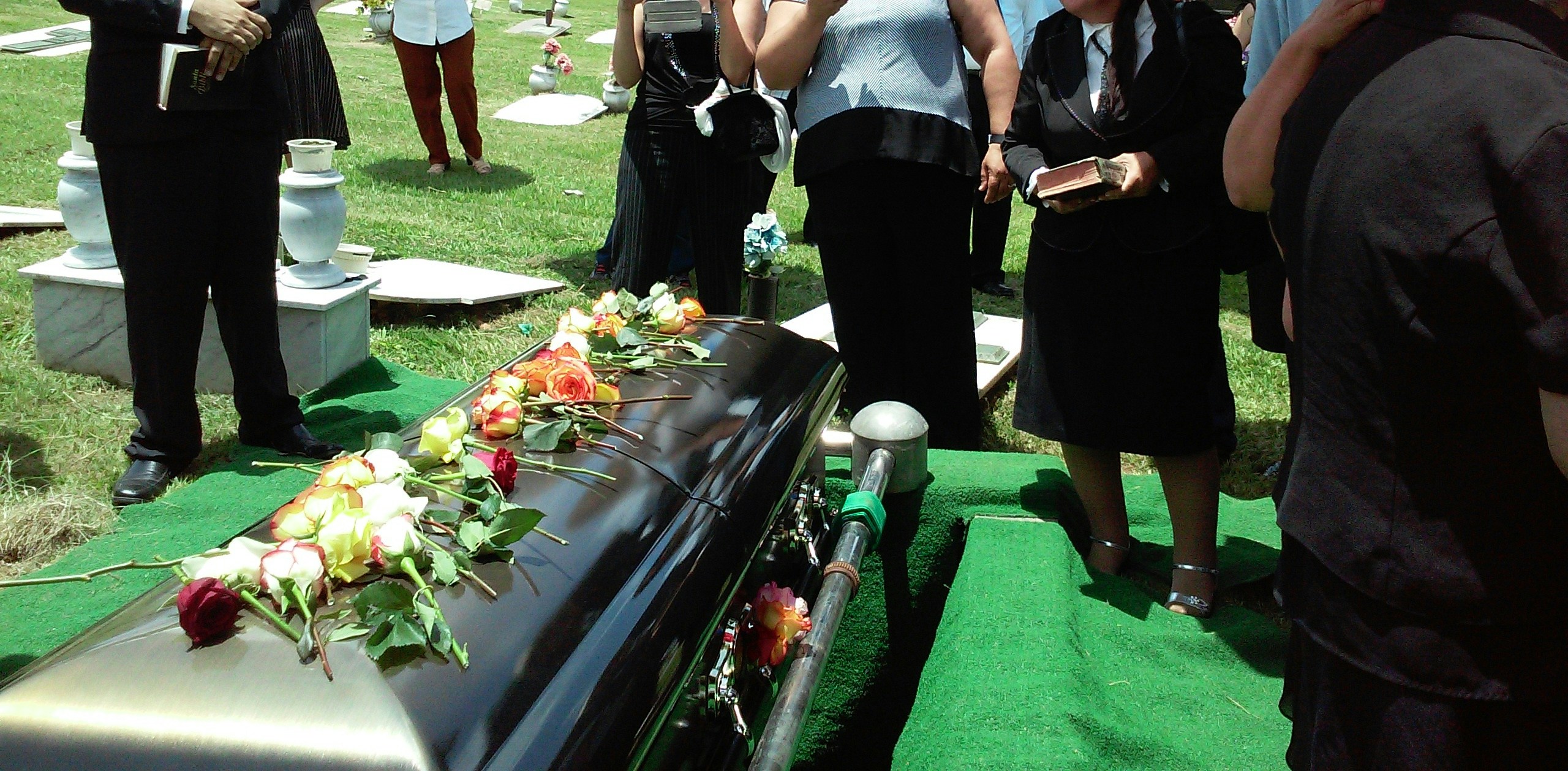
The question “why are funerals 3 days after death?” This pattern comes from the way many traditional funeral arrangements are organized. When someone dies, family members come together, relatives and friends are notified, and the funeral service or burial may take place several days later.Three days can be mistaken for a rule of sorts. The reality is that there is no hard and fast rule that there must be exactly three days between death and a funeral.
Three days is likely a result of religious custom, common practices and beliefs, embalming or preservation concerns, availability of the funeral home, the law, family needs, and what the family wants to do.
Some traditions may have a need for burial to occur quite a bit earlier, and some may desire several days prior to holding a service. In America, in particular, the variations in funeral arrangements can be quite significant and it is not a federally mandated time line that there must be exactly three days. The Federal Trade Commission points out that funeral customs vary based on culture and religious traditions, individual preferences as well as what method of funeral arrangements is used. To understand why three days comes into play one must examine what occurs between death and disposal rather than assume a mystical or universal three.
Is There a Rule That Funerals Must Be Held Three Days After Death?
Nope. A funeral isn’t required by law to happen after three days. A person can have a funeral the very next day after they passed away, a week later, or even two or three weeks.
Each family, culture, region, religion, and country have a different idea about when someone should have a funeral.
A cremated corpse will most often still have a wake followed by a funeral ( or sometimes a “Celebration of Life.”). And the transport of remains is another time factor depending on distance for funerals that aren’t conducted the same day as passing. It’s key because often common practice is misconstrued as a mandate for services. For example, U.S.
Federal laws don’t mandate embalming for all deaths and every state law will have a variation on a death preservation/disposal with regard to cremation and/or refrigeration.
The FTC states plainly that, in some states, “embalming or refrigeration” is needed if remains aren’t “interred or cremated within” a certain timeframe, but with many other options, such as burial or cremation services. So, really, 3 days is sort of an interesting period of time within certain burial practices – it isn’t any sort of national standard.
Why Are Funerals 3 Days After Death?
There can be a combination of effects that result in a funeral being held around the third day. Chief amongst these are: time needed to prepare the service and the deceased; religious needs; preservation of the deceased; relatives traveling from afar to attend the funeral; arrangements being made with the cemetery or cremation providers.
1. Families Need Time to Make Funeral Arrangements
When someone dies, a substantial to-do list of things need to get done – some can’t be pushed to a later time. You’ll have a funeral to plan-which can involves going to the funeral home, identifying the person who has died, making paperwork, burial or cremation, choice of graveyard/cemetery, transport for people going from one place to another, family members needing notifying, choice of an outfit/flowers and the planning of the format of a religious service, as well as whether or not to have a viewing or visitation. You may have to liaise with your cemetery, crematory, officiant/clergy man or woman, live music/music, for example.
This would actually have all of the ingredients of an organization job or more of a logistical job rather than only a ceremony.
If you want a relatively fast funeral then it is crucial for three organs/people to be in attendance at the one and the same period so the period is 3 days.
2. Relatives May Need Time to Travel
An easy answer may be a traveling family. Immediate family might reside in another city, state, or country. This takes time to book airline tickets, transportation, get accommodation, get baby care, or time off of work.
If services were on very soon after the death, this would simply make it impossible for family to get there time to attend.
A wait of several days often suffices allowing the family time to travel, which can be considerable, especially if large in scope of distance. The timing is, therefore, something of a juggling between urgency to inter or incinerate as the case may be and ability to have people gather.
3. The Body May Need to Be Prepared for a Viewing
When a viewing or visitation is involved in the funeral, additional preparations may need to be made. Funeral home employees will be able to prepare the body according to local rules and depending on the conditions in which the death occurred – some will dress, disinfect, cosmetize and embalm the body. In many cases, embalming only slows up decomposition for a while and it is how viewings of a body will be presented.
Take time to distinguish legal requirements from funeral home procedures: According to the FTC, embalming is typically not required in the United States, though state and local guidelines may have specific conditions in which embalming might be required.
The site adds that for many funerals arrangements with viewing will require a more in-depth explanation that the body cannot be kept properly cool without embalming, providing one explanation of why a funeral would be conducted multiple days after a death and require this.
4. Religious and Cultural Traditions Can Determine Timing
Perhaps the greatest determining factor in the timing of a funeral is religion. The practice of different religions regarding the disposal of the body, the speed of burial, and the rites to be observed varies greatly. Some Jewish and Islamic faiths, for instance, conventionally require relatively quick burial-it is therefore unwise to simply presume a three-day wait would be appropriate for their communities. Other rites may include a period of mourning, prayer, visiting, or the process of a funeral director preparing the body, all of which may require a longer gap between the death of the deceased and their burial.
This is why a question such as “why are funerals 3 days after death?” It cannot be answered solely from a medical or logistical perspective.Funeral timing is also a cultural practice.
The FTC likewise recognizes that funeral practices are shaped by religious and cultural traditions as well as personal preferences.
5. Funeral Homes and Cemeteries Have Scheduling Constraints
Multiple stakeholders should agree on when a funeral will take place.
A funeral home may need to schedule workers and its space. A cemetery must accommodate the burial time and have workers at the correct times. A crematory may schedule services based on its own availability. A religious institution (church, synagogue, mosque, etc.) may also have limited availability.
A grieving family may wish to hold a funeral on the following day and find that there is no available burial spot for two or three days; they will thus be constrained not by the calendar or natural process, but by real-time availability. This is true especially if many families schedule burials at weekend, religious holidays and other times when the country has high demands for funeral services.
How Body Preservation Affects Funeral Timing
What happens to the body after death. Your body will experience natural, biological processes. This occurs more or less quickly depending on the temperature of room where remains are being held, as well as the environment where body is being placed and what actions were taken to ensure remains look more as they did when living for public viewing.
Funeral home staff can provide temporary care for the body.
The two ways they do so are refrigeration and (if a family chooses to have remains embalmed for whatever reasons) embalming. Refrigeration or embalming can, therefore, delay natural decay process for reasonable period but neither can completely halt the natural processes nor does FTC regulate their use. Funeral provider cannot claim their funeral home’s specific burial products or embalming will halt the aging and decaying process of the deceased indefinitely.
Refrigeration Can Provide Another Option
Refrigeration as an alternative may be suitable in the relevant circumstances.
According to the FTC, ‘some states requires refrigeration or embalming of the body where burial or cremation does not occur within a specified time frame’. ‘Refrigeration may be suitable where appropriate’….
It is not possible to judge the number of days between death and the funeral in isolation from the form of treatment being employed.
For example, the circumstances affecting a family wishing to have a closed casket viewing may differ to the family having an open casket viewing and the subsequent treatment to be applied to the body will have corresponding varying needs.

Does a Three-Day Funeral Have a Religious Meaning?
Sometimes, but not universally.
As some people practice religious & cultural rituals where number 3 holds meaning it can become easy for people to assume that all three day funerals are for religious reasons. This assumption is however too large as it is not true for all three day funerals.
Although there is the practice for some religions of having a funeral about three days after death, this also holds true for traditions not related to any religion where people might be waiting for the relatives to be present at the funeral.
For this reason it is beneficial to have religious timing and funeral industry timing separated.
Two separate families might have funerals three days after the death for two separate reasons; religion or for the family, wait time of relations and funeral parlor preparations.
Why Doesn’t Every Funeral Happen After Three Days?
Because there is no single funeral timetable.
Some circumstances favor a much faster funeral.
Some families want immediate burial. Some religions may consider quick burial important. A body might be shipped for cremation directly. The family or the situation might not permit release of the body for a while.
The FTC defines direct burial as a burial that follows shortly after death. There is typically not a viewing or visits. They define direct cremation as cremation that follows a death shortly without embalming or a viewing.
In addition to that there can be other scenarios of a long time until funeral.
For instance, relatives have to be flown in from overseas, the death requires a cause of death investigation, cemetery does not have any open slots available or family wants to plan a ceremony in a later date.
Therefore three days are neither shortest nor longest period of time after death and funeral.
What Happens During the Three Days?
The exact process varies, but the period between death and a funeral often involves several stages.
First, the death must be formally documented and the deceased transferred to an appropriate facility or funeral home. The family then works with funeral professionals to determine the desired arrangements.
If there is a viewing, preparation of the body may take place. Clothing, cosmetics, flowers, transportation, casket or urn selection, religious elements, and service details may also be arranged.
At the same time, relatives and friends are notified.
The family will also have to make decisions about burial vs. Cremation and the family will also have to make arrangements with the cemetery or crematory. The funeral provider might even be responsible for obtaining necessary permits in some situations and jurisdictions.
The FTC explains thatfuneral services can include such things as: refrigeration and preparation and transport of the remains, embalming, preparation of notices and their filing, obtaining permits and other authorizations and making arrangements with cemeteries, crematories or other third parties,.
This also explains why it can take several days when the family is planning what they assume will be a fairly simple service.
Does Embalming Mean the Funeral Must Be Three Days Later?
No.
Embalming does not create a universal three-day schedule.
This preservation process could be chosen for a variety of reasons — you’d like a viewing for your family, a specific situation mandates the procedure be chosen or a given state or jurisdiction demands it under special circumstances. It is worth noting that when viewed against the backdrop of federal law within the United States,embalming is not universally required. Further to the above, the Funeral Rule states that funeral providers cannot represent embalming is legally required and must acquire written authorization to proceed with embalming under that particular set of rules. Of course, actual laws differ between state and locality, so you will want to ensure you ascertain from your chosen funeral provider which of these apply to your circumstances.
Common Misunderstandings About the Three-Day Funeral Tradition
“Every funeral has to happen within three days.”
This is incorrect. Funeral timing varies widely according to religion, culture, family preference, location, legal requirements, and the chosen method of disposition.
“Three Days Is Required Because the Body Becomes Unsafe After That.”
This oversimplifies the issue. Body care and preservation are important, but the exact requirements depend on circumstances and local regulations. Refrigeration, embalming, burial, and cremation can affect the practical timeline.
“Embalming is legally required if the funeral is three days later.”
Not necessarily. In the United States, most states do not require routine embalming for every death. Some circumstances may require embalming or refrigeration, while funeral homes may also have policies concerning public viewing.
“A three-day funeral always has religious significance.”
Not necessarily. Religious customs can influence timing, but a three-day interval may simply reflect practical planning.
How Families Can Determine the Appropriate Funeral Timing
–The actual time the funeral occurs should depend on circumstances, not some artificial 3-day limit. –Families should examine religious or cultural expectations for a funeral or burial date first. Next they can question their provider regarding laws, preservation alternatives, burial options and timelines. –Traveling relatives should factor into the date, too. –For families thinking about expenses of a funeral, it pays to discriminate among services required by law versus services elected as a matter of preference.
In the United States the Funeral Rule, enacted by the Federal Trade Commission, provides many consumer rights when purchasing goods and services in the context of a funeral, including, for instance, choice rights. –Rather than merely asking “why is the service delayed by three days,” families are better served asking, “what specific issue is impacting our chosen date,” the answer can be a preference of faith community, for familytravel concerns or perhaps an accommodation made with respect for burial site schedules.
The Bigger Picture: Funeral Timing Is a Balance
It’s more than just how much time has passed since death that a funeral date denotes. It is an intersection of numerous practical and emotional issues. The family may need time to assemble, the funeral home must make ready the remains, a place at the cemetery or crematorium is required, and a particular ceremony or ritual must be performed.
Some families may however prefer cremation or burial immediately and as such have little reason to wait two or three days for the event.
Thus the three-day rule should not be thought of as standard, but as a typical time frame.
Conclusion
So, why are funerals 3 days after death? In many cases, the answer is a combination of practical preparation, family travel, body preservation, funeral-home and cemetery scheduling, and religious or cultural customs. However, not all funerals must occur three days after death. In some cultures, the burial needs to take place well before three days, while others may delay for travel time, convenience, or other personal reasons.
It is most crucial to understand the difference between those things that must occur, those that it is customary to do, and those things which it is simply convenient for the family to do. This clarification makes timing and other funeral decisions quite easy to comprehend.
8. FAQs
1. Why are funerals usually held a few days after death?
A few days can give the family time to notify relatives, make funeral arrangements, prepare the deceased, coordinate with a cemetery or crematory, and arrange a religious or memorial service. The exact timing varies considerably.
2. Is there a law requiring a funeral within three days?
No universal law requires funerals to occur three days after death. Legal requirements concerning the handling and disposition of remains vary by jurisdiction.
3. Can a funeral happen the day after someone dies?
Yes. Some religious traditions and direct-burial arrangements favor prompt burial. The timing depends on local requirements, the family’s wishes, and the circumstances surrounding the death.
4. Does a funeral three days after death require embalming?
Not automatically. In the United States, embalming is generally not required for every death. Whether preservation is needed depends on applicable law, the type of funeral, viewing arrangements, refrigeration, and funeral-home policies.
5. Why do some families wait longer than three days?
Longer delays can result from relatives traveling from distant locations, cemetery or funeral-home availability, religious observances, transportation of remains, legal or medical procedures, or the family’s decision to hold a memorial service later.
6. Do all religions hold funerals three days after death?
No. Religious funeral customs differ substantially. Some traditions emphasize prompt burial, while others allow or encourage different periods for mourning and ceremony.
7. Is a three-day funeral connected to the decomposition of the body?
Now while that makes practical sense, there’s no hard-and-fast rule of three-day bodies just yet: Preservation like refrigeration, embalming, burial or cremation means your body can’t last forever for whatever comes next.