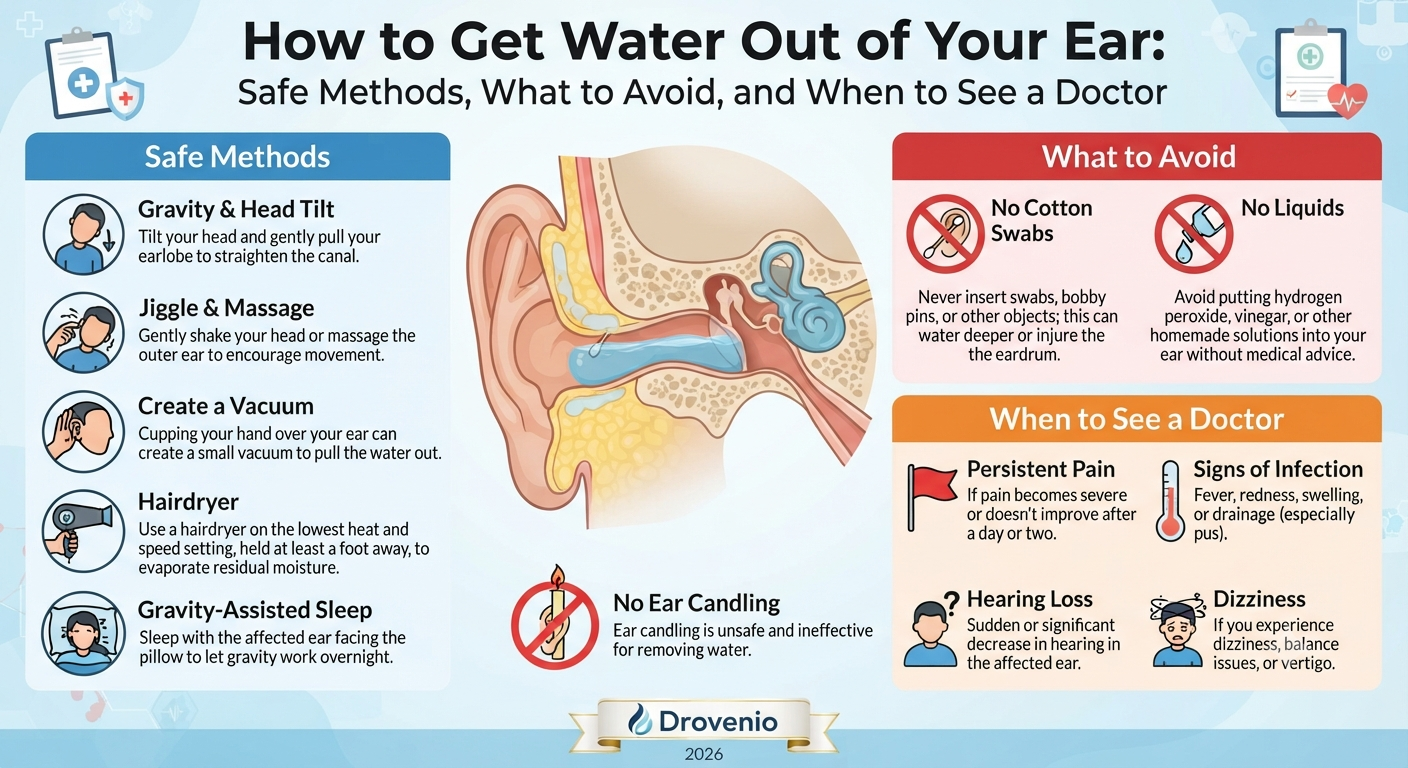
If you’ve ever gone swimming, taken a shower, or washed your hair and felt water trapped in your ear, you know how uncomfortable it can be. The sensation may include muffled hearing, a feeling of fullness, or even a sloshing sound when you move your head. Fortunately, learning how to get water out of your ear is usually straightforward, and in most cases, the water drains on its own or can be removed safely with simple techniques.
Water trapped in the ear is common and usually isn’t a serious problem. However, if it remains in the ear canal for too long, it can increase the risk of irritation or an infection commonly known as swimmer’s ear. Knowing the safest ways to remove water—and which methods to avoid—can help protect your ears and prevent complications.
This comprehensive guide explains how to get water out of your ear, why water becomes trapped, the best home remedies, what not to do, and when it’s time to seek medical attention.
Why Does Water Get Trapped in Your Ear?
Before learning how to get water out of your ear, it’s helpful to understand why it happens.
Water can become trapped in the outer ear canal after:
- Swimming.
- Showering.
- Bathing.
- Washing your hair.
- Water sports.
Certain factors increase the likelihood of trapped water, including:
- Narrow ear canals.
- Excess earwax.
- Wearing earplugs or hearing aids.
- Frequent swimming.
Most trapped water drains naturally within a short period, but occasionally it remains in the ear canal.
Symptoms of Water Trapped in the Ear
When water is stuck inside the ear, you may notice:
- A feeling of fullness.
- Muffled hearing.
- Sloshing or bubbling sounds.
- Mild discomfort.
- Tickling inside the ear.
- A sensation that something is moving.
If symptoms become painful or persist for several days, medical evaluation is recommended.
How to Get Water Out of Your Ear Safely
The following methods are generally safe for most people and are often effective.
1. Tilt Your Head
One of the easiest ways to remove trapped water is to use gravity.
How to do it:
- Tilt the affected ear toward the ground.
- Gently pull your earlobe in different directions.
- Hop lightly on one foot if comfortable.
This simple technique often allows the water to drain naturally.
2. Create a Vacuum With Your Palm
Another common method involves using your hand to create gentle suction.
Steps:
- Tilt your head so the affected ear faces downward.
- Place your palm tightly over the ear.
- Press gently and release several times.
- Remove your hand and allow the water to drain.
Avoid pressing too forcefully.
3. Lie on Your Side
Gravity can also work while resting.
Simply lie down with the affected ear facing the pillow for several minutes. In many cases, the water slowly drains on its own.
4. Yawn or Swallow
For ear fullness associated with barotrauma after flying or other pressure changes, try: Popping and swallowing the ears, then opening yawning, swallowing, popping, chewing the ears. However, this is not particularly successful if there is water present and should not be confused with pressure changes that could block the Eustachian tubes.
5. Use a Warm Compress
Applying gentle warmth may encourage trapped water to evaporate and help relax surrounding tissues.
Instructions:
- Soak a clean washcloth in warm (not hot) water.
- Wring out excess water.
- Hold it against the affected ear for 30 seconds.
- Repeat several times.
6. Use a Hair Dryer on the Lowest Setting
Warm moving air may help evaporate trapped moisture.
How to use it safely:
- Set the hair dryer to the lowest heat and fan setting.
- Hold it at least 12 inches (30 cm) away from your ear.
- Move it continuously rather than focusing on one spot.
- Gently pull your earlobe while drying.
Never use high heat or hold the dryer too close to the ear.
7. Try Gravity and Gentle Jaw Movements Together
Combining gravity with jaw movement can sometimes improve drainage.
Tilt your head while:
- Opening and closing your mouth.
- Moving your jaw side to side.
- Gently chewing.
These movements may help shift trapped water.
Can Ear Drops Help?
Some over-the-counter drying ear drops are designed to help remove moisture from the outer ear canal, particularly after swimming.
However, do not use ear drops if you:
- Have ear pain.
- Have drainage from the ear.
- Suspect a ruptured eardrum.
- Have recently had ear surgery.
If you’re unsure, consult a healthcare professional before using any ear drops.
What NOT to Do
Knowing how to get water out of your ear also means understanding what should be avoided.
Avoid these methods:
Cotton Swabs
Cotton swabs can push water and earwax deeper into the ear canal and increase the risk of injury.
Sharp Objects
Never insert keys, bobby pins, toothpicks, or other objects into your ear.
Ear Candling
Ear candling is not recommended and has not been shown to safely remove trapped water. It can also cause burns and injuries.
Excessive Force
Avoid shaking your head violently or using high-pressure water or air inside the ear.
These methods may cause more harm than good.
How Long Does Trapped Water Last?

In most cases, water leaves the ear within a few minutes to several hours.
Occasionally, it may remain trapped for a day or two.
If water stays in the ear for more than 24 to 48 hours, especially if accompanied by pain or discharge, you should contact a healthcare provider.
Can Trapped Water Cause an Ear Infection?
Yes. Water that remains in the ear canal for an extended period can create a moist environment where bacteria or fungi grow more easily.
This may lead to swimmer’s ear (otitis externa).
Symptoms of an infection include:
- Increasing ear pain.
- Redness.
- Swelling.
- Itching.
- Drainage.
- Fever (less common).
- Reduced hearing.
Prompt treatment can help prevent complications.
How to Prevent Water from Getting Trapped in Your Ear
Once you learn how to get water out of your ear, it’s equally important to know how to prevent the problem from happening again. A few simple habits can significantly reduce the chances of water becoming trapped.
Here are some helpful prevention tips:
- Dry your ears gently with a clean towel after swimming or showering.
- Tilt your head to each side after getting out of the water to help any remaining moisture drain naturally.
- Consider wearing well-fitting swim earplugs if you’re a frequent swimmer.
- Use a swim cap to help reduce the amount of water entering your ears.
- If recommended by your healthcare provider, use drying ear drops after swimming (only if you do not have ear pain, drainage, a perforated eardrum, or recent ear surgery).
Preventing moisture from remaining in the ear canal is one of the best ways to avoid discomfort and reduce the risk of infection by following proper ear hygiene and infection prevention practices.
What Is Swimmer’s Ear?
One reason people search how to get water out of your ear is to avoid swimmer’s ear, also known as otitis externa.
Swimmer’s ear is an infection of the outer ear canal that develops when moisture remains trapped, creating an environment where bacteria or fungi can grow.
Common symptoms include:
- Ear pain that may worsen when touching the ear.
- Itching inside the ear canal.
- Redness and swelling.
- Fluid or pus draining from the ear.
- Temporary hearing changes due to swelling.
Swimmer’s ear usually requires medical treatment, often with prescription ear drops.
Water Trapped Behind the Eardrum
Sometimes the sensation of water in the ear isn’t caused by water in the outer ear canal at all.
Instead, it may be related to fluid trapped behind the eardrum in the middle ear. This often occurs because of:
- A cold.
- Allergies.
- Sinus infections.
- Eustachian tube dysfunction.
Unlike water in the outer ear, this type of fluid cannot be removed by tilting your head or using gravity. It usually requires treatment of the underlying condition, and a healthcare provider can determine the appropriate approach.
When Should You See a Doctor?
Although learning how to get water out of your ear solves the problem for most people, there are situations where professional medical evaluation is important.
Contact a healthcare provider if:
- Water seems trapped for more than 24–48 hours.
- Ear pain becomes severe.
- You notice swelling or redness.
- There is drainage of pus or blood.
- Your hearing becomes significantly reduced.
- You develop fever along with ear symptoms.
- You have diabetes or a weakened immune system and develop ear pain.
Prompt evaluation can help prevent complications and ensure appropriate treatment.
Can Earwax Cause Water to Get Stuck?
Yes. Earwax can sometimes contribute to trapped water.
While earwax normally protects the ear canal, excessive buildup may:
- Narrow the ear canal.
- Trap water after swimming.
- Cause muffled hearing.
- Increase the feeling of fullness.
If you suspect impacted earwax, avoid trying to remove it yourself with cotton swabs or other objects. A healthcare professional can safely remove excessive earwax if needed.
Myths About Removing Water from Your Ear
Many home remedies circulate online, but not all are safe or effective.
Myth 1: Cotton Swabs Remove Water
False. Cotton swabs often push water and earwax deeper into the ear canal and may injure the delicate skin or eardrum.
Myth 2: Pour Any Liquid Into Your Ear
False. Not every liquid is safe for the ear. Only use products specifically recommended for ear care, and avoid ear drops if you have pain, drainage, or a suspected eardrum injury unless directed by a healthcare professional.
Myth 3: Shake Your Head Violently
False. Gentle head tilting may help, but vigorous shaking can cause neck strain and is unlikely to improve drainage.
Myth 4: Water in the Ear Is Always Dangerous
False. In most cases, trapped water is temporary and resolves without causing any lasting problems.
Tips for Frequent Swimmers

People who swim regularly are more likely to experience trapped water, so understanding swimming ear safety tips can help reduce recurring episodes and protect ear health.
Helpful strategies include:
- Dry your ears immediately after swimming.
- Tilt your head to both sides after leaving the pool.
- Wear properly fitted swimming earplugs.
- Follow pool hygiene recommendations.
- Consider preventive drying drops if recommended by your healthcare provider.
Taking these simple steps can reduce repeated episodes of trapped water.
Can Children Get Water Trapped in Their Ears?
Yes. Children often experience water trapped in the ear after swimming or bathing.
Parents should avoid inserting cotton swabs or other objects into a child’s ear. Instead, encourage gentle head tilting and allow gravity to help drain the water.
If a child develops ear pain, fever, drainage, or persistent hearing changes, consult a pediatric healthcare provider.
Conclusion
Knowing how to get water out of your ear can help relieve discomfort quickly and reduce the risk of developing swimmer’s ear. In most cases, simple methods such as tilting your head, gently pulling on the earlobe, lying on your side, or using a warm compress allow trapped water to drain naturally. A hair dryer on the lowest heat setting may also help evaporate remaining moisture when used safely.
Similarly, there are some things that you should never do when your ear has got water inside. You must strictly not make use of cotton swabs, ear candles, other pointed or sharp objects to remove the water inside and also do not use a blow drier to try and remove water out. These things may actually do more damage to the ear.
When you have not yet managed to get rid of trapped water for more than 2 days, the water has started to cause severe ear pains, and also when you have swelling around the ears, the water has been accompanied with fever and there is any hearing impairment or blockage of the ear with wax, it would then be advisable to visit your physician so that appropriate diagnosis and treatments can be commenced early to avoid more damage.
So follow the techniques suggested and take good care of your ears after showers and swims to make sure you stay away from the risk of water blockage.
Frequently Asked Questions (FAQs)
1. How do I get water out of my ear quickly?
Tilting your head toward the affected side, gently pulling your earlobe, lying on your side, or creating gentle suction with your palm are often effective ways to help water drain naturally.
2. Is it safe to use a hair dryer?
Yes, if used correctly. Keep the hair dryer on the lowest heat and fan setting, hold it at least 12 inches (30 cm) from the ear, and keep it moving continuously.
3. Can trapped water damage my hearing?
Can trapped water damage my hearing? Temporary muffled hearing is common while water is trapped, and readers can also explore more ear health and hearing care guides for related wellness information.
Temporary muffled hearing is common while water is trapped. Hearing usually returns to normal once the water drains. Persistent hearing loss should be evaluated by a healthcare provider.
4. Why won’t the water come out of my ear?
This may be happening because of having a blockage in the ear canal, an infected ear, or because excess earwax is built up and is hindering properly drainage. If the situation doesn’t improve within a day or two, you should definitely consult a doctor for a possible diagnosis and solution.
5. Can I sleep with water in my ear?
Yes, but sleeping with the affected ear facing downward may help gravity drain the water. If discomfort continues the next day, try safe removal techniques or consult a healthcare provider.
6. Can water trapped in my ear cause an infection?
Yes. Prolonged moisture can increase the risk of swimmer’s ear (otitis externa), especially if bacteria or fungi begin to grow in the damp ear canal.
7. Should I use cotton swabs to remove water?
No. Cotton swabs can push water and earwax deeper into the ear canal and may cause injury.
8. When should I see a healthcare provider?
Seek medical care if water remains trapped for more than 24–48 hours, if you develop severe pain, drainage, fever, swelling, or noticeable hearing loss.